I'm not a conservative and I don't play one on TV, but I really don't have much of a problem with wire tapping of phone conversations by the US Government, but I do think the American people should be warned about the policy.
I disagree with the President's notion that notifying people of that is "helping the enemy" -- it's a deterent. Yes, "the ememy" may be less likely to use a cell phone, but I really don't think so. Think about it; what's the alternative technology? We seem to assume that "the enemy" is super rich and all powerful. No. There is no "enemy" but there is a set of very upset people with backgrounds different from our own. The US seems to want to not improve relations with some of them.
There are also others -- Americans -- who are to be feared. White supremacist and Neo-nazi groups are two examples of this.
In short, as long as wire taps are appropriately used, there should be no problem with them. But if the President went out and did this without proper authorization, then he should be repremanded, if only with bad PR.

Tuesday, December 20, 2005


Monday, December 19, 2005
Five new worldwide trends for finding love
Ok, it's the start of 2005, but it's still relevant!
THE SEXES with MEL RISON
Five new trends for finding love
Mel Risdon
January 7, 2005
If you brought in the new year without locking lips with a special someone, chances are you're among the many singles resolving to find Mr. or Mrs. Right in the next 12 months.
Here are five of the hottest dating trends to watch for in 2005:
SOLO TRAVEL:
Look for more companies coming on board with travel packages designed for singles. Diane Redfern started the Connecting Solo Travel Network back in 1990. "It's a central resource that looks for opportunities for singles to travel comfortably and economically on their own and it includes companies that are dating-oriented." Diane's membership-based website (www.cstn.org) advertises more than 350 such trips from a multitude of companies.
They include fastdatertravel.com, a New York company specializing in a kind of vacation speed-dating. Singles can take a Caribbean cruises, a ski getaway to Aspen or a golf trip to Scottsdale, Ariz., all while meeting other singles (and not fretting over the usual "based on double occupancy" brochures).
BLIND DATES WITH A TWIST:
You've done the chat rooms, dating services and pretty much everything else out there, but I'll bet you've never tried a Dinner-in-the-Dark party. Originating in New York and making its way across the States, it's the latest on the socializing scene.
Offered by cosmoparty.com, Dinner-in-the-Dark is an interesting new way of hooking people up. You gather at a venue where you are paired with a dinner companion in pitch blackness. You dine blindly, and your partner isn't revealed until dessert arrives.
The program — touted as a way to get to know a potential partner without looks being the first impression — is coming to Toronto, Montreal and Vancouver, so it's only a matter of time before Calgary singles dine in the dark.
IDIGU:
Huge in Japan and spreading like wildfire, text-message-dating brings a high-tech tool to the singles' world. It's a portable, inexpensive, safe and definitive way to target exactly what you're looking for and pursue on your own terms.
Canadian-based Mobilehookup launched in May of 2004 and is now introducing a North American first — Talk Now voice/SMS technology allowing two mobile users to hook up anonymously via the telephone. Your privacy is maintained while you get to know each other.
SPEED-DATING EVOLUTION:
What was once a novel idea is today almost mainstream: Get a group of guys and girls together and allow them quick sessions to chat and see if they can make a connection. Calgary has a number of speed dating services, including Six Minute Dates.
Christine Hart, who runs the service with business partner Dana Blonde, says the company is always looking for new ways to enhance and improve. "We feel like we're on the edge of greatness," said Hart. With a new speed-dating venue (Zodiak, 515 10 St. S.W.) and a new monthly speed-dating/wine tasting event, Hart and Blonde say the old "meat-market" stigmas are fading away.
"We've expanded into Vancouver with our first event coming up on Jan. 18," Hart says.
"We're also in the process of developing added online feature. We've been watching other companies in the States that have very successfully added these types of features."
REALITY TV:
Built on the success of such shows as The Bachelor and Bachelorette (plus lesser reality mind candy such as Elimidate), look for more of the same on the tube. Though nothing can be divulged at this point, I can say this — look for some new local dating programs in the coming months.
No doubt I'll have all the details in The Sexes once the "leaks" are confirmed.
Happy dating in 2005!
THE SEXES with MEL RISON
Five new trends for finding love
Mel Risdon
January 7, 2005
If you brought in the new year without locking lips with a special someone, chances are you're among the many singles resolving to find Mr. or Mrs. Right in the next 12 months.
Here are five of the hottest dating trends to watch for in 2005:
SOLO TRAVEL:
Look for more companies coming on board with travel packages designed for singles. Diane Redfern started the Connecting Solo Travel Network back in 1990. "It's a central resource that looks for opportunities for singles to travel comfortably and economically on their own and it includes companies that are dating-oriented." Diane's membership-based website (www.cstn.org) advertises more than 350 such trips from a multitude of companies.
They include fastdatertravel.com, a New York company specializing in a kind of vacation speed-dating. Singles can take a Caribbean cruises, a ski getaway to Aspen or a golf trip to Scottsdale, Ariz., all while meeting other singles (and not fretting over the usual "based on double occupancy" brochures).
BLIND DATES WITH A TWIST:
You've done the chat rooms, dating services and pretty much everything else out there, but I'll bet you've never tried a Dinner-in-the-Dark party. Originating in New York and making its way across the States, it's the latest on the socializing scene.
Offered by cosmoparty.com, Dinner-in-the-Dark is an interesting new way of hooking people up. You gather at a venue where you are paired with a dinner companion in pitch blackness. You dine blindly, and your partner isn't revealed until dessert arrives.
The program — touted as a way to get to know a potential partner without looks being the first impression — is coming to Toronto, Montreal and Vancouver, so it's only a matter of time before Calgary singles dine in the dark.
IDIGU:
Huge in Japan and spreading like wildfire, text-message-dating brings a high-tech tool to the singles' world. It's a portable, inexpensive, safe and definitive way to target exactly what you're looking for and pursue on your own terms.
Canadian-based Mobilehookup launched in May of 2004 and is now introducing a North American first — Talk Now voice/SMS technology allowing two mobile users to hook up anonymously via the telephone. Your privacy is maintained while you get to know each other.
SPEED-DATING EVOLUTION:
What was once a novel idea is today almost mainstream: Get a group of guys and girls together and allow them quick sessions to chat and see if they can make a connection. Calgary has a number of speed dating services, including Six Minute Dates.
Christine Hart, who runs the service with business partner Dana Blonde, says the company is always looking for new ways to enhance and improve. "We feel like we're on the edge of greatness," said Hart. With a new speed-dating venue (Zodiak, 515 10 St. S.W.) and a new monthly speed-dating/wine tasting event, Hart and Blonde say the old "meat-market" stigmas are fading away.
"We've expanded into Vancouver with our first event coming up on Jan. 18," Hart says.
"We're also in the process of developing added online feature. We've been watching other companies in the States that have very successfully added these types of features."
REALITY TV:
Built on the success of such shows as The Bachelor and Bachelorette (plus lesser reality mind candy such as Elimidate), look for more of the same on the tube. Though nothing can be divulged at this point, I can say this — look for some new local dating programs in the coming months.
No doubt I'll have all the details in The Sexes once the "leaks" are confirmed.
Happy dating in 2005!
Interracial relationships are on the increase in U.S., but decline with age, Cornell study finds
An interesting article in that it indirectly explains why women over 35 with personal ads such as those on Match.com seem to specify a man of a type of color, be it black or more often -- American is majority Caucasian -- white. Below is an excerpt, and the rest can be read by clicking the title of this post.
By Susan S. Lang - Cornell News
ITHACA, N.Y. -- Interracial relationships and marriages are becoming more common in the United States, according to a new Cornell University study.
The number of interracial marriages involving whites, blacks and Hispanics each year in the United States has jumped tenfold since the 1960s, but the older individuals are, the less likely they are to partner with someone of a different race, finds the new study.
Pat Cassano, assistant professor of nutritional sciences, and Ron Booker, associate professor of neurobiology and behavior, are an interracial couple who have been together since she was 19 and he was 20 years old, about 31 years ago.
"We think that's because relationships are more likely to be interracial the more recently they were formed, so younger people are more likely to have interracial relationships. This trend reflects the increasing acceptance of interracial relationships in today's society," said Kara Joyner, assistant professor of policy analysis and management at Cornell and co-author of a study on interracial relationships in a recent issue of the American Sociological Review (Vol. 70:4).
By Susan S. Lang - Cornell News
ITHACA, N.Y. -- Interracial relationships and marriages are becoming more common in the United States, according to a new Cornell University study.
The number of interracial marriages involving whites, blacks and Hispanics each year in the United States has jumped tenfold since the 1960s, but the older individuals are, the less likely they are to partner with someone of a different race, finds the new study.
Pat Cassano, assistant professor of nutritional sciences, and Ron Booker, associate professor of neurobiology and behavior, are an interracial couple who have been together since she was 19 and he was 20 years old, about 31 years ago.
"We think that's because relationships are more likely to be interracial the more recently they were formed, so younger people are more likely to have interracial relationships. This trend reflects the increasing acceptance of interracial relationships in today's society," said Kara Joyner, assistant professor of policy analysis and management at Cornell and co-author of a study on interracial relationships in a recent issue of the American Sociological Review (Vol. 70:4).
Coldplay disappointed at three albums

The band want to be like The Beatles
(From NME.com)
Coldplay have revealed they are disappointed with only releasing three albums.
The band have said that compared with The Beatles' work rate, they are a lot slower and are starting to panic.
"We just love being creative," bassist Guy Berryman said. "When we're out on the road, it's amazing to play live but we're really missing what we do best, which is creating. We've been together for almost ten years now and we've only made three albums."
Speaking to BBC 6 Music, he added: "When you look at people like The Beatles who knocked out a couple a year, it sort of makes us start to panic a little bit. So we're just desperate to get back into the studio."
Coldplay tickets link is the title of this entry
Sunday, December 18, 2005
Racism and Mental Health
I found this book today, and while looking for something entirely different. But given the recent controversy over racism's consideration as an official mental illness and the Sydney Riots, I thought this was very appropriate. I hope others see this.
Racism and Mental Health
Charles V. Willie
Bernard M. Kramer
Bertram S. Brown
@1973, University of Pittsburgh Press
The forward of the book reads that "discrimination based on race, creed, color, sex, and national origin interferes with opportunities for individual expression by some and blinds others to their normal obligations. There is no health in a society afflicted by racism and discrimination."
In the chapter "Racism and Mental Health as a Field of Thought and Action" Bernard Kramer states that "mental health professional react in one manner to racism in general and in other to racism in mental health. They tend to finesse the question of race." He contends that mental health has ignored or underplayed racial aspects of the field, and gives examples to demonstrate this, pointing to a then-widely-used textbook in the field and stating that of 1,631 pages, not one concerns the topic of race or racism. He presents other evidence as well.
The book also presents a kind of history of racism and mental health and provides "definitions of mental disorder in a racist society." Before I elaborate on that, I must present what the authors give as "the essence of racism," which "lies in a relatively constant pattern of prejudice and discrimination between one party who is idealized and favored and another who is devalued and exploited in a common relationship" (p.61).
That is in a racist relationship there can't be an equality of roles, and has not been -- they basically state that relationships between whites and people of color have been imbalanced. They also go on to give other examples of similar relationships: male and female, and management and labor. "When racism is defined this broadly," Mr. Pinderhughes writes," it can be viewed as a characteristic of human nature that may be employed for constructive or destructive purposes.
The Negative Impact of Racism on African American Mental Health
The authors discuss how a declining yet historic fear among African Americans regarding seeking psychiatric treatment for the impact of racism may result in paranoid social behavior.
There is one chapter called "Racism and the Mental Heath of White Americans" which suggests that it's a form of paranoia, where a person believes that the lesser group either receives a special benefit, or is lazy, or will kill them, and so on. Thomas Pettigrew writes that "the highly prejudiced less often possess positive mental health than others," (p.292) and that there's a relationship between mental health and authoritarianism such that "it may not be possible to manifest an extreme degree of authoritarianism without being psychologically maladjusted."
The point of this is that racism has been linked to negative mental health for several decades -- it's not as new as the recent news would suggest. But considering the wealth of date and evidence, it is amazing that racism still is not officially considered a mental illness.
Racism and Mental Health
Charles V. Willie
Bernard M. Kramer
Bertram S. Brown
@1973, University of Pittsburgh Press
The forward of the book reads that "discrimination based on race, creed, color, sex, and national origin interferes with opportunities for individual expression by some and blinds others to their normal obligations. There is no health in a society afflicted by racism and discrimination."
In the chapter "Racism and Mental Health as a Field of Thought and Action" Bernard Kramer states that "mental health professional react in one manner to racism in general and in other to racism in mental health. They tend to finesse the question of race." He contends that mental health has ignored or underplayed racial aspects of the field, and gives examples to demonstrate this, pointing to a then-widely-used textbook in the field and stating that of 1,631 pages, not one concerns the topic of race or racism. He presents other evidence as well.
The book also presents a kind of history of racism and mental health and provides "definitions of mental disorder in a racist society." Before I elaborate on that, I must present what the authors give as "the essence of racism," which "lies in a relatively constant pattern of prejudice and discrimination between one party who is idealized and favored and another who is devalued and exploited in a common relationship" (p.61).
That is in a racist relationship there can't be an equality of roles, and has not been -- they basically state that relationships between whites and people of color have been imbalanced. They also go on to give other examples of similar relationships: male and female, and management and labor. "When racism is defined this broadly," Mr. Pinderhughes writes," it can be viewed as a characteristic of human nature that may be employed for constructive or destructive purposes.
The Negative Impact of Racism on African American Mental Health
The authors discuss how a declining yet historic fear among African Americans regarding seeking psychiatric treatment for the impact of racism may result in paranoid social behavior.
There is one chapter called "Racism and the Mental Heath of White Americans" which suggests that it's a form of paranoia, where a person believes that the lesser group either receives a special benefit, or is lazy, or will kill them, and so on. Thomas Pettigrew writes that "the highly prejudiced less often possess positive mental health than others," (p.292) and that there's a relationship between mental health and authoritarianism such that "it may not be possible to manifest an extreme degree of authoritarianism without being psychologically maladjusted."
The point of this is that racism has been linked to negative mental health for several decades -- it's not as new as the recent news would suggest. But considering the wealth of date and evidence, it is amazing that racism still is not officially considered a mental illness.
Friday, December 16, 2005
Randal wins "The Apprentice" but asked to share title? Now, if he were white...

I've got to admit that I'm tired of adjustments and exceptions being made whenever an African American male is clearly the best at something. Here's another example... (You can read the full story with a click on the link title post).
MSNBC
Updated: 2:26 p.m. ET Dec. 16, 2005
Thursday night, the fourth edition of "The Apprentice" came to an end, but the controversy has just begun.
Randal was a star from the beginning, and it was no surprise when Donald Trump offered him the job as his latest Apprentice. What was a little surprising was what happened next: As he had hinted he'd do all night long, Trump seemed ready to hire both Rebecca and Randal for different jobs in his organization. Yet when he asked Randal for his opinion, the winner quickly stated that he felt there should be only one Apprentice. And in a most un-Trumplike move, the billionaire went along with his newest hire's decision.
Everyone can agree that's what happened. But no one can agree on anything else. Many think race was a factor: Randal is Trump's first African-American "Apprentice," and some thought Trump was racially biased in asking him to not be the only "Apprentice" when none of the other winners, who were all white, held the title alone. Some pointed out that the first finale was also between a white and an African-American contender, yet when a white man, Bill, won, he wasn't asked his opinion about also hiring African-American Kwame.
Thursday, December 15, 2005
"King Kong" Upsets Oscar Best Picture Race - Brokeback Prediction Premature - Golden Globes Screws Up

Before King Kong's release, many were picking "Brokeback Mountain" as the possible winner of the Oscar "Best Picture" race as we approach the March 5th Academy Awards.
But now, there's a view that Brokeback may go the way of "Sideways" -- much talked about, but not the winner.
If Peter Jackson's everyone's selection for Best Director, then Academy history backs the selection of King Kong as best picture. If that happens, it will be the first film in 30 years not to receive a Golden Globe nod, yet win Best Picture.
The website The Envelope.com has a pole reporting that King Kong was the most neglected film in the Globes.
Bush takes responsibility for invasion intelligence
Does this mean the Downing Street Memo's are true? What wrong intelligence?
Wednesday, December 14, 2005
King Kong : A Great Example Of The Power of Film
Peter Jackson's epic remake of "King Kong" contains several scenes where the actors do stunts that you know they'd never survive in real life. But such is the amazing power of this film; you go along with all of them.
King Kong is an amazing film in many technical areas, but it manages to avoid surpressing the story for the special effects. Star Wars' creator George Lucas once said "Special effects without a story is a pretty boring thing." King Kong is certainly not that.
The audience at the midnight show of the three-hour event sat in rapt attention, as Mr. Jackson propelled us through a vast set of environments. Much positive text will be devoted to the presentation of Skull Island. But for me the real star of the show was 1933 New York. WETA has forever solved the problem of depth perception in CGI movies. The city actually feels big on screen. And every detail -- including the popular architectural and urban design features of the New York of that era -- were lovingly captured. It's still very hard for me to tell if what I saw was just a digitally animated image. It's that good.
I also enjoyed the character interplay between Jack Black's Carl Denholm and everyone else. Naomi Watts is the best emoter of any actress stuck with the difficult task of CGI work. Adrian Broady was quite right for his role as the writer Mr. Driscoll, but he could have done with one more tender moments with Ms. Darrow.
The only aspect of the film I found hard to accept was that Watt's / Darrow's fears of possibly failing thousands of feet from the Empire State Building were not activated. In real life, they would be ; it's far too windy up there! My fear of heights was certainly activated in this film, yet I knew it was all digitally produced -- someone forgot to tell my stomach.
Kong was simply wonderful both as a character and as a special effect. You do come away with some feeling for the creatures plight. But I wondered if Watts' Darrow would ever realize the futility of her relationship with the creature. It's as if she was so busy reaching out to have something she was willing to settle for the impossible.
I do recommend this movie. The only thing I'd change is the CGI work on the boats and the actors in them as they were coming away from The Venture -- their lighting was too bright and contrasty versus the digital surroundings.
And does this movie have to have an African American man (Hayes) die an early, dramatic death? Why can't he live? Why does he have to do something heroically dumb? Kong tossing him toward the rock wall made me wish I was there to tell him to stop being a hero and go hide before the gorilla gets him.
It also made me wish I had a set of hand grenades: ten would have done the trick: two for Kong and thrown in his mouth, one each for the T-rexes of which there were three, and the rest (six) to bomb the hell out of those spiders before they got to me.
Yep, with ten grenades -- and a machine gun -- I'd have survived just long enough to get off Skull Island. But the simple fact that I imagined this protection for myself speaks to the visceral impact of this great example of the power of film.
King Kong is an amazing film in many technical areas, but it manages to avoid surpressing the story for the special effects. Star Wars' creator George Lucas once said "Special effects without a story is a pretty boring thing." King Kong is certainly not that.
The audience at the midnight show of the three-hour event sat in rapt attention, as Mr. Jackson propelled us through a vast set of environments. Much positive text will be devoted to the presentation of Skull Island. But for me the real star of the show was 1933 New York. WETA has forever solved the problem of depth perception in CGI movies. The city actually feels big on screen. And every detail -- including the popular architectural and urban design features of the New York of that era -- were lovingly captured. It's still very hard for me to tell if what I saw was just a digitally animated image. It's that good.
I also enjoyed the character interplay between Jack Black's Carl Denholm and everyone else. Naomi Watts is the best emoter of any actress stuck with the difficult task of CGI work. Adrian Broady was quite right for his role as the writer Mr. Driscoll, but he could have done with one more tender moments with Ms. Darrow.
The only aspect of the film I found hard to accept was that Watt's / Darrow's fears of possibly failing thousands of feet from the Empire State Building were not activated. In real life, they would be ; it's far too windy up there! My fear of heights was certainly activated in this film, yet I knew it was all digitally produced -- someone forgot to tell my stomach.
Kong was simply wonderful both as a character and as a special effect. You do come away with some feeling for the creatures plight. But I wondered if Watts' Darrow would ever realize the futility of her relationship with the creature. It's as if she was so busy reaching out to have something she was willing to settle for the impossible.
I do recommend this movie. The only thing I'd change is the CGI work on the boats and the actors in them as they were coming away from The Venture -- their lighting was too bright and contrasty versus the digital surroundings.
And does this movie have to have an African American man (Hayes) die an early, dramatic death? Why can't he live? Why does he have to do something heroically dumb? Kong tossing him toward the rock wall made me wish I was there to tell him to stop being a hero and go hide before the gorilla gets him.
It also made me wish I had a set of hand grenades: ten would have done the trick: two for Kong and thrown in his mouth, one each for the T-rexes of which there were three, and the rest (six) to bomb the hell out of those spiders before they got to me.
Yep, with ten grenades -- and a machine gun -- I'd have survived just long enough to get off Skull Island. But the simple fact that I imagined this protection for myself speaks to the visceral impact of this great example of the power of film.
Tuesday, December 13, 2005
Stanley Williams may you rest in Heaven and God bless you
The Lord gives everyone a second chance. I struggled with writing about this, as I too would give pause to the fact that my emotions would be different if it were my family member. But that written, I don't think "an eye for an eye" is the best response.
I also wonder if this case was really well researched. In other words, what is the evidence that can show he's guilty? There were no fingerprints that could be attached to him, according to this article in the "Final Call."
If this case is reopened and he's found to be innocent, then a number of people, including the Governor, should step down from their positions.
I also wonder if this case was really well researched. In other words, what is the evidence that can show he's guilty? There were no fingerprints that could be attached to him, according to this article in the "Final Call."
If this case is reopened and he's found to be innocent, then a number of people, including the Governor, should step down from their positions.
Sydney Riot: Wake up Australia, racism is a problem
This link to an article on The Darren Lehmann case reveals a side of Austrialia not know to most Americans. It was written in 2003, and so serves as more evidence of the kind of society that would give rise to the racist riot the World saw over the weekend.
Sydney Riot: White Australia Policy - Immigration Restriction Act
Apparently this law -- click on the title link -- has been on the Austrialian books for 100 years and not repealed. As the rate of immigration has increased, some white Aussies have called for a return to the "White Austrialia Policy." Well, I'll not be visiting Sydney soon.
This is totallly sick. It's also a look into the cultural underpinnings of the rationale for the behavior of the white youths who went on their racist rampage a few days ago. Undoubtedly, their parents were the source of racist hate. Terrible.
This is totallly sick. It's also a look into the cultural underpinnings of the rationale for the behavior of the white youths who went on their racist rampage a few days ago. Undoubtedly, their parents were the source of racist hate. Terrible.
Sydney Riot: Sydney's racist mob violence spreads - news account uses word "people" but doesn't report that they're white; why?
Read this carefully. It's from a Melbourne, Austrialia newspaper called "The Age." We know that the victims are Middle Eastern, but we don't know that the attackers are white. Video accounts reveal that all of the 5,000 rioters. Why cover up that they're white?
A day of race-fuelled violence at Cronulla spread through other beachside suburbs in Sydney's south on Sunday night, with one man stabbed and at least 10 arrested.
About 5,000 people descended on Cronulla beach as mobs yelling racist chants chased down and bashed people of Middle Eastern appearance.
Police and an ambulance crew were also assaulted as racial tensions peaked.
Hopes that the violence had subsided by nightfall were dashed when, in an apparent retaliatory strike, a 23-year-old man was stabbed in the back outside a golf club at nearby Woolooware.
Two cars carrying a group of males, described by police as being of Mediterranean or Middle Eastern appearance, approached the man at about 10.25pm (AEDT) Sunday night.
Following a short conversation he was stabbed in the back, and was taken to hospital in a serious condition.
At about the same time, up to 50 carloads of youths smashed more than 100 cars with baseball bats and other weapons in the beach suburb of Maroubra.
A day of race-fuelled violence at Cronulla spread through other beachside suburbs in Sydney's south on Sunday night, with one man stabbed and at least 10 arrested.
About 5,000 people descended on Cronulla beach as mobs yelling racist chants chased down and bashed people of Middle Eastern appearance.
Police and an ambulance crew were also assaulted as racial tensions peaked.
Hopes that the violence had subsided by nightfall were dashed when, in an apparent retaliatory strike, a 23-year-old man was stabbed in the back outside a golf club at nearby Woolooware.
Two cars carrying a group of males, described by police as being of Mediterranean or Middle Eastern appearance, approached the man at about 10.25pm (AEDT) Sunday night.
Following a short conversation he was stabbed in the back, and was taken to hospital in a serious condition.
At about the same time, up to 50 carloads of youths smashed more than 100 cars with baseball bats and other weapons in the beach suburb of Maroubra.
Chris Rock not hosting 2006 Academy Awards - apparently pissed off Jude Law

Chris Rock not hosting Oscars
LOS ANGELES, California (AP) -- Chris Rock won't be back cracking wise as the host of next year's Oscars telecast.
"He is not hosting the Academy Awards," the comedian's publicist, Matt Labov, said Friday in a brief statement e-mailed to The Associated Press. He did not elaborate.
Labov told The New York Times that Rock didn't want to do the show "in perpetuity" but would "like to do it again down the road."
The 2005 telecast was Rock's first as host. He drew younger viewers, but his barbs skewering stars like Jude Law, Tobey Maguire and others alienated some members of the Academy of Motion Picture Arts and Sciences.
In one bit, Rock suggested filmmakers should wait for better talent instead of rushing bad movies into theaters.
"You want Tom Cruise and all you can get is Jude Law. Wait," Rock joked. "You want Russell Crowe and all you can get is Colin Farrell? Wait. 'Alexander' is not 'Gladiator.' "
He also poked fun at himself.
"You want Denzel (Washington) and all you can get is me? Wait," he joked.
Rock's comments prompted Sean Penn, when he took the stage later, to defend Law as "one of our finest actors."
Rock is currently producing and narrating "Everybody Hates Chris," a sitcom on UPN based on his life.
A spokesman for the Academy declined to comment about the hosting duties. Longtime Academy Awards producer Gil Cates is expected to announce his selection in the next few weeks.
Frequently mentioned candidates include four-time host Whoopi Goldberg, two-time host Steve Martin and late-night hosts Jay Leno and Conan O'Brien.
The 78th annual Academy Awards will air March 5 on ABC from Hollywood.
Some of Rock's quotes:
"It's a great night tonight. We have four black nominees. tonight. It's kinda like Def Oscar Jam tonight."
"Black movies don't have real names, they have names like Barbershop. That's not a name, that's just a location."
"Our next presenter is the first woman to ever breast-feed an Apple - Gwyneth Paltrow."
"The only acting you ever see at the Oscars is when people act like they're not mad they lost. Nicole Kidman was smiling so wide (the year Halle Berry beat her to best actress), she should have won an Emmy at the Oscars for her great performance. I was like, 'If you'd done that in the movie, you'd have won an Oscar, girl!'"
"You want Denzel and all you can get is me...wait. Denzel's a fine actor. He woulda never made Pootie Tang. Clint Eastwood's a star, OK? Tobey Maguire's just a boy in tights. You want Tom Cruise and all you can get is Jude Law? Wait! You want Russell Crowe and all you can get is Colin Farrell, wait! Alexander is not Gladiator."
Apartments unaffordable for many - Is the US headed for a depression?
It makes you wonder, considering this news.
Cost of rental housing increased faster than wages
Tuesday, December 13, 2005; Posted: 7:12 p.m. EST (00:12 GMT)
WASHINGTON (AP) -- The cost of rental housing has increased faster than wages, making it increasingly difficult for low-income families to afford even modest apartments, an advocacy group said Tuesday.
"The picture is similar to past years, but it's getting worse," said Danilo Pelletiere, research director of the National Low Income Housing Coalition.
The coalition, which advocates for more affordable housing, issues a report each year tracking rental costs in every state, county and metropolitan area in the country.
It says families should spend no more than 30 percent of their incomes on housing and utilities, a standard recognized by many housing experts. Under that standard, the coalition said it could not find a single county in the United States where a full-time worker making minimum wage could afford a one-bedroom apartment.
In reality, the report found, many low-income families spend a far larger share of their incomes on housing.
Plus, more and more jobs are being lost to the movement of production offshore, or simply eliminated due to technology. Meanwhile, some Americans allow themselves to be tricked into thinking that the problem is related to illegal immigrants, when nothing could be further from the truth.
Cost of rental housing increased faster than wages
Tuesday, December 13, 2005; Posted: 7:12 p.m. EST (00:12 GMT)
WASHINGTON (AP) -- The cost of rental housing has increased faster than wages, making it increasingly difficult for low-income families to afford even modest apartments, an advocacy group said Tuesday.
"The picture is similar to past years, but it's getting worse," said Danilo Pelletiere, research director of the National Low Income Housing Coalition.
The coalition, which advocates for more affordable housing, issues a report each year tracking rental costs in every state, county and metropolitan area in the country.
It says families should spend no more than 30 percent of their incomes on housing and utilities, a standard recognized by many housing experts. Under that standard, the coalition said it could not find a single county in the United States where a full-time worker making minimum wage could afford a one-bedroom apartment.
In reality, the report found, many low-income families spend a far larger share of their incomes on housing.
Plus, more and more jobs are being lost to the movement of production offshore, or simply eliminated due to technology. Meanwhile, some Americans allow themselves to be tricked into thinking that the problem is related to illegal immigrants, when nothing could be further from the truth.
Monday, December 12, 2005
Dreamworks Business Model Fails - Studio Purchased By Paramount for $1 billion
Dreamworks SKG -- the studio that produced the great movie "American Beauty" -- was purchased by Viacom / Paramount for just north of $1 billion.
"When Steven, Jeffrey and I started the company and had to put an entire infrastructure together from day one, we had hoped to be able to make enough films to rationalize the cost of being our own distributor," David Geffen -- the "G" in SKG said Sunday."
I wonder if this would not have been the case, had Dreamworks concentrated on producing very low budget movies of up to $1 milllion, each.
"When Steven, Jeffrey and I started the company and had to put an entire infrastructure together from day one, we had hoped to be able to make enough films to rationalize the cost of being our own distributor," David Geffen -- the "G" in SKG said Sunday."
I wonder if this would not have been the case, had Dreamworks concentrated on producing very low budget movies of up to $1 milllion, each.
Time writer says she may have given tip to Rove's lawyer
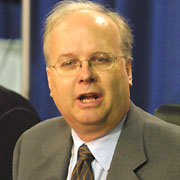
It seems that Rove may have been unintentionally warned before his testimory. Check this story out
Richard B. Schmitt, Los Angeles Times
Monday, December 12, 2005
Printable Version
Email This Article
Washington -- A Time magazine correspondent acknowledged Sunday that she may have unwittingly aided the defense of Karl Rove in the CIA leak investigation by telling the White House aide's lawyer about a conversation Rove had with one of her colleagues about CIA officer Valerie Wilson.
The tip, offered over drinks at a Washington restaurant sometime during the first half of 2004, apparently led Rove to correct testimony he had given to a federal grand jury in the case, according to a first-person account by Time reporter Viveca Novak, posted Sunday on the magazine's Web site.
NY Senator Hillary Clinton's Rein Can't Be Challenged By A Weak Pirro

The bottom line in this Newsday article is the Senator's a certain choice for reelection and may just be the best Presidential candidate the Democrats have, even if she does not run.
Study: Whites automatically React More Negatively to Blacks Than to Whites. (The Cure? Diversity)
This article was from the November 2001 "Monitor on Psychology." The full article can be read with a click on the title of this post.
Social psychologist Russell Fazio, PhD, of Ohio State University, has been examining a related phenomenon he calls "automatically activated attitudes" toward those of different races. He was the first to develop a measure estimating whites' positive or negative associations to and evaluations of blacks, without having to directly ask them for this information.
The technique tests the extent to which briefly flashed pictures of black or white faces influence the speed at which participants identify the meaning of a positive or negative adjective. The research shows that many whites automatically react more negatively to blacks than to whites, even though they claim they don't consciously hold such views.
Understanding hate crimes
In research suggesting why some people may turn their ethnic discomfort into drastic action, psychologist Jack Glaser, PhD, of the University of California, Berkeley's Goldman School of Public Policy, Yale University political scientist Donald Green, PhD, and journalist Jay Dixit took the novel approach of joining in a white racist Internet chat room to discern attitudes there.
In a study in press in the Journal of Social Issues, the team "chatted" with white racists by describing fabricated threats to their white hegemony, ranging from immediate local threats to more abstract national ones. Included in the chats were scenarios of blacks competing with whites for jobs, moving into the neighborhood or marrying white women. (The team went to great lengths to protect respondents' confidentiality, Glaser notes.)
The closer blacks came to "invading" whites' cultural turf, the more violent the responses, the team found. Job competition didn't pose an enormous threat, for instance, but the possibility of a white-black marriage created major sparks.
"The more extreme responses seemed to be about a threat to their cultural integrity," Glaser notes.
This seems to imply that as American society becomes more economically diverse, and intermarriage rates continue to increase, hate crime rates by those anti-social whites may rise as well. I hope that this is discouraged by stronger law enforcement, education, and treatment of this behavior as a mental illness. The real remedy is greater diversity, so that people "get used to each other" as Star Trek's Doctor McCoy once said.
Social psychologist Russell Fazio, PhD, of Ohio State University, has been examining a related phenomenon he calls "automatically activated attitudes" toward those of different races. He was the first to develop a measure estimating whites' positive or negative associations to and evaluations of blacks, without having to directly ask them for this information.
The technique tests the extent to which briefly flashed pictures of black or white faces influence the speed at which participants identify the meaning of a positive or negative adjective. The research shows that many whites automatically react more negatively to blacks than to whites, even though they claim they don't consciously hold such views.
Understanding hate crimes
In research suggesting why some people may turn their ethnic discomfort into drastic action, psychologist Jack Glaser, PhD, of the University of California, Berkeley's Goldman School of Public Policy, Yale University political scientist Donald Green, PhD, and journalist Jay Dixit took the novel approach of joining in a white racist Internet chat room to discern attitudes there.
In a study in press in the Journal of Social Issues, the team "chatted" with white racists by describing fabricated threats to their white hegemony, ranging from immediate local threats to more abstract national ones. Included in the chats were scenarios of blacks competing with whites for jobs, moving into the neighborhood or marrying white women. (The team went to great lengths to protect respondents' confidentiality, Glaser notes.)
The closer blacks came to "invading" whites' cultural turf, the more violent the responses, the team found. Job competition didn't pose an enormous threat, for instance, but the possibility of a white-black marriage created major sparks.
"The more extreme responses seemed to be about a threat to their cultural integrity," Glaser notes.
This seems to imply that as American society becomes more economically diverse, and intermarriage rates continue to increase, hate crime rates by those anti-social whites may rise as well. I hope that this is discouraged by stronger law enforcement, education, and treatment of this behavior as a mental illness. The real remedy is greater diversity, so that people "get used to each other" as Star Trek's Doctor McCoy once said.
Study: Blacks Four Times More Likely to Be Hate Crime Victims in LA County When Compared to Their Representation of That County's Population
For the full report, click on the title of this post.
Edward Dunbar Ed.D.
University of California at Los Angeles
and Pacific Psychological Associates
Findings from an ongoing study of hate crime occurrence in Los Angeles County are presented for the years of 1994 and 1995. Content analyses of data from the Los Angeles County Human Relations Commission included 1459 hate crimes cases; this encompassed events reported to both law enforcement and community-based organizations. The behavioral analyses of the crime events were considered in terms of victim impact, as was determined via impairment ratings provided by Victim-Witness Assistance staff (a Los Angeles County agency). Key findings are highlighted below.
Severity of Impact
Findings indicated that base rates of victimization varied significantly by race/ethnic groups; most notably African Americans were four times more likely to be the victims of hate crime activity when compared to their demographic representation in Los Angeles County.
When comparing hate crimes motivated by race/ethnic, and religion to sexual orientation, hate crimes against gay men and lesbians were more severe (as measured by the behavioral characteristics of the event, e.g., more perpetrators, more serious attack).
When examining the hate crimes based on race and ethnicity, African Americans were the targets of more severe hate events, (e.g., physical assaults).
The majority of hate crimes were committed in public locations. Those which occurred in the victim's neighborhood were typically more violent.
Law Enforcement Reportage:
The behavioral analysis of the hate crime revealed that more severe hate acts (e.g. aggravated assault, sexual assault) were predictive of the victim not reporting the crime to law enforcement agencies.
It was found that in sexual orientation hate crimes, that significant differences for both gender and membership in a visible race/ethnic minority group were related to lower law enforcement reportage rates.
County Victim Witness Assistance staff also reported that few if any hate crime victims utilize state-funded medical and mental health services subsequent to crime victimization.
Perpetrator Behavior and Characteristics:
Less than five percent of the hate crime perpetrators were identified as members of organized hate gangs or associations.
Edward Dunbar Ed.D.
University of California at Los Angeles
and Pacific Psychological Associates
Findings from an ongoing study of hate crime occurrence in Los Angeles County are presented for the years of 1994 and 1995. Content analyses of data from the Los Angeles County Human Relations Commission included 1459 hate crimes cases; this encompassed events reported to both law enforcement and community-based organizations. The behavioral analyses of the crime events were considered in terms of victim impact, as was determined via impairment ratings provided by Victim-Witness Assistance staff (a Los Angeles County agency). Key findings are highlighted below.
Severity of Impact
Findings indicated that base rates of victimization varied significantly by race/ethnic groups; most notably African Americans were four times more likely to be the victims of hate crime activity when compared to their demographic representation in Los Angeles County.
When comparing hate crimes motivated by race/ethnic, and religion to sexual orientation, hate crimes against gay men and lesbians were more severe (as measured by the behavioral characteristics of the event, e.g., more perpetrators, more serious attack).
When examining the hate crimes based on race and ethnicity, African Americans were the targets of more severe hate events, (e.g., physical assaults).
The majority of hate crimes were committed in public locations. Those which occurred in the victim's neighborhood were typically more violent.
Law Enforcement Reportage:
The behavioral analysis of the hate crime revealed that more severe hate acts (e.g. aggravated assault, sexual assault) were predictive of the victim not reporting the crime to law enforcement agencies.
It was found that in sexual orientation hate crimes, that significant differences for both gender and membership in a visible race/ethnic minority group were related to lower law enforcement reportage rates.
County Victim Witness Assistance staff also reported that few if any hate crime victims utilize state-funded medical and mental health services subsequent to crime victimization.
Perpetrator Behavior and Characteristics:
Less than five percent of the hate crime perpetrators were identified as members of organized hate gangs or associations.
Psychologists call for assault on hate crimes - From APA
While the story may have taken a new level of visibility recently in an article featured in this blog this report reveals that the mental health community has considered this matter as far back as 1998. The full report can be see with a click on the title of this post. For what has been done since then, keep your eye on this blog.
By Jeannine Mjoseth
APA Monitor staff
Hate crimes constitute a unique class of violence against a person's identity, demanding distinctive psychological, legislative and policy responses, psychologists said at a briefing co-sponsored by APA and the Society for the Psychology Study of Social Issues. The briefing, timed to correspond with a larger White House Conference on Hate Crimes, was attended by representatives from 24 House and Senate offices, including Rep. John Lewis (D-Ga.) who recounted his experience as a hate crimes survivor during the civil rights movement.
Four distinct motives underlie hate crimes based on sexual orientation, according to research by Karen Franklin, PhD, forensic psychology fellow at Washington University’s Washington Institute for Mental Illness Research and Training. Such hate crimes are motivated by self-defense, where perpetrators interpret the victim’s actions as a sexual proposition; ideology, where perpetrators view themselves as enforcers of social norms that deem homosexuality unacceptable; thrill-seeking, where perpetrators commit assaults to alleviate boredom; and peer dynamics, where perpetrators aim to prove their toughness and heterosexuality to friends, she found.
When addressing ethnically based hate crimes, the highest rate of crime occurs when nonwhites rapidly move into previously all-white enclaves, said Donald Green, PhD, professor of political science and director of the Institute for Social Policy Studies at Yale University. “It’s not just how white the neighborhood is but also how rapid the changes are,” he said. Green, who helped train the New Haven, Conn., police department how to deal with hate crimes, says such crimes probably will increase in the suburbs in the next few years as more minorities move there, and it is important for the police to be prepared and respond appropriately.
Victims of hate crimes undergo higher levels of psychological distress, including post-traumatic stress disorder, depression and anger, than victims of other crimes, said Greg Herek, PhD, research psychologist at the University of California, Davis, who spoke on the impact of anti-gay/lesbian victimization at the briefing. Herek, whose research was funded by the National Institute of Mental Health, attended the White House conference as APA’s representative.
Hate crimes can cause victims to view the world and people in it as malevolent and experience a reduced sense of control, Herek said. According to his research, hate crime victims needed as much as five years to overcome the emotional distress of the incident compared with victims of nonbias crimes, who experienced a drop in crime-related psychological problems within two years of the crime.
“We need special policies for hate crimes because they have a special impact on the victim and the victim’s community,” Herek added.
Hate crimes occur in the context of ongoing harassment and are less likely than other crimes to be reported to the police, he said. For example, one-third of hate crime victims reported the incident to law enforcement officials, compared with 57 percent of the victims of random crimes, Herek found.
Lower levels of hate crime reporting is due, in part, to victims’ fear of future contact with the perpetrators, said Edward Dunbar, EdD, clinical psychologist, from the University of California, Los Angeles, who studied hate crimes in Los Angeles County. In the most serious cases of hate crimes, like sexual assault and assault with a deadly weapon, people are much less likely to go to law enforcement agencies, he said.
Legislation and APA action
At the White House conference, President Clinton commended a new federal bill (S. 1529) that would expand federal prosecutors’ ability to prosecute racially motivated violence by removing unnecessary jurisdictional requirements and make hate crimes based on sexual orientation, gender or disability a federal crime. Both APA and SPSSI have been actively involved in coordinating the conference and promoting the bill.
The bill, introduced by Sens. Edward Kennedy (D-Mass.) and Arlen Specter (R-Pa.), builds upon the 1994 federal Hate Crimes Sentencing Enhancement Act, which requires stiffer sentences for hate crimes in which the defendant intentionally selects a victim or the property belonging to someone based on actual or perceived race, religion or ethnicity.
To date, 38 states and the District of Columbia have enacted laws that intensify sentencing penalties if the defendant chooses a victim based on his/her perception of the victim’s race, religion, national origin, sexual orientation or gender.
In 1991 APA approved a hate-crimes resolution urging Congress to recognize and address hate crimes as an important policy issue. APA’s resolution opposes harassment, violence and crime based on race, ethnicity, religion, sexual orientation, gender or physical condition. APA also encourages researchers, clinicians, teachers and policy-makers to help reduce and eliminate hate crimes and to alleviate the effects on victims. APA has increased its role in promoting federal initiatives against hate crimes through the efforts of the SPSSI and its public policy office.
For more information on what APA is doing to combat hate crimes, contact Jeanine Cogan of APA’s Public Policy Office at (202) 336-6153.
By Jeannine Mjoseth
APA Monitor staff
Hate crimes constitute a unique class of violence against a person's identity, demanding distinctive psychological, legislative and policy responses, psychologists said at a briefing co-sponsored by APA and the Society for the Psychology Study of Social Issues. The briefing, timed to correspond with a larger White House Conference on Hate Crimes, was attended by representatives from 24 House and Senate offices, including Rep. John Lewis (D-Ga.) who recounted his experience as a hate crimes survivor during the civil rights movement.
Four distinct motives underlie hate crimes based on sexual orientation, according to research by Karen Franklin, PhD, forensic psychology fellow at Washington University’s Washington Institute for Mental Illness Research and Training. Such hate crimes are motivated by self-defense, where perpetrators interpret the victim’s actions as a sexual proposition; ideology, where perpetrators view themselves as enforcers of social norms that deem homosexuality unacceptable; thrill-seeking, where perpetrators commit assaults to alleviate boredom; and peer dynamics, where perpetrators aim to prove their toughness and heterosexuality to friends, she found.
When addressing ethnically based hate crimes, the highest rate of crime occurs when nonwhites rapidly move into previously all-white enclaves, said Donald Green, PhD, professor of political science and director of the Institute for Social Policy Studies at Yale University. “It’s not just how white the neighborhood is but also how rapid the changes are,” he said. Green, who helped train the New Haven, Conn., police department how to deal with hate crimes, says such crimes probably will increase in the suburbs in the next few years as more minorities move there, and it is important for the police to be prepared and respond appropriately.
Victims of hate crimes undergo higher levels of psychological distress, including post-traumatic stress disorder, depression and anger, than victims of other crimes, said Greg Herek, PhD, research psychologist at the University of California, Davis, who spoke on the impact of anti-gay/lesbian victimization at the briefing. Herek, whose research was funded by the National Institute of Mental Health, attended the White House conference as APA’s representative.
Hate crimes can cause victims to view the world and people in it as malevolent and experience a reduced sense of control, Herek said. According to his research, hate crime victims needed as much as five years to overcome the emotional distress of the incident compared with victims of nonbias crimes, who experienced a drop in crime-related psychological problems within two years of the crime.
“We need special policies for hate crimes because they have a special impact on the victim and the victim’s community,” Herek added.
Hate crimes occur in the context of ongoing harassment and are less likely than other crimes to be reported to the police, he said. For example, one-third of hate crime victims reported the incident to law enforcement officials, compared with 57 percent of the victims of random crimes, Herek found.
Lower levels of hate crime reporting is due, in part, to victims’ fear of future contact with the perpetrators, said Edward Dunbar, EdD, clinical psychologist, from the University of California, Los Angeles, who studied hate crimes in Los Angeles County. In the most serious cases of hate crimes, like sexual assault and assault with a deadly weapon, people are much less likely to go to law enforcement agencies, he said.
Legislation and APA action
At the White House conference, President Clinton commended a new federal bill (S. 1529) that would expand federal prosecutors’ ability to prosecute racially motivated violence by removing unnecessary jurisdictional requirements and make hate crimes based on sexual orientation, gender or disability a federal crime. Both APA and SPSSI have been actively involved in coordinating the conference and promoting the bill.
The bill, introduced by Sens. Edward Kennedy (D-Mass.) and Arlen Specter (R-Pa.), builds upon the 1994 federal Hate Crimes Sentencing Enhancement Act, which requires stiffer sentences for hate crimes in which the defendant intentionally selects a victim or the property belonging to someone based on actual or perceived race, religion or ethnicity.
To date, 38 states and the District of Columbia have enacted laws that intensify sentencing penalties if the defendant chooses a victim based on his/her perception of the victim’s race, religion, national origin, sexual orientation or gender.
In 1991 APA approved a hate-crimes resolution urging Congress to recognize and address hate crimes as an important policy issue. APA’s resolution opposes harassment, violence and crime based on race, ethnicity, religion, sexual orientation, gender or physical condition. APA also encourages researchers, clinicians, teachers and policy-makers to help reduce and eliminate hate crimes and to alleviate the effects on victims. APA has increased its role in promoting federal initiatives against hate crimes through the efforts of the SPSSI and its public policy office.
For more information on what APA is doing to combat hate crimes, contact Jeanine Cogan of APA’s Public Policy Office at (202) 336-6153.
Saturday, December 10, 2005
King Kong Oscar Campaign Ads

 The Ads are out already. Peter Jackson for Best Director, Jack Black for Best Supporting Actor, Naomi Watts for Best Actress, and so on..
More Evidence Racism is A Sickness: "Psychiatry Ponders Whether Extreme Bias Can Be an Illness" - Wash Post
Friday night at The Balboa Cafe in San Francisco, I ran into a woman who I have seen many times in public. She said "I see you all the time...I'm giving you my contact information, but just remember I prefer white men."
OK.
For every person, mostly white, I've encountered who was afraid to have more black friends, or made racially insenstive comments, or openly discriminated on the basis of race in the formation of friendships, I've always wondered what was going on mentally to cause this.
Or think about the SF 49ers video with the overtly racist content; the producers of that could be found to hold a form of mental illness. That goes for the San Francisco Police Video and the Stanford "Big Game" Video, too.
Well, it seems the psychiatric community has pondered this too. It could lead to a whole new classification of mental illness. I think it's a watershed development in that perhaps now people can indeed get help for being racist and stop being that way. Indeed, as our society becomes more diverse -- where people of all races are holding all kinds of jobs and intermarriage is more and more the norm, it's about time we as a nation and a world put the breaks on racist thought.
Because as our industrialized world becomes more diverse, those who have racist thought patterns will be the most uncomfortable in it, and that discomfort can be expressed in ways that harm others, from denial of employment to the most extreme example, murder.
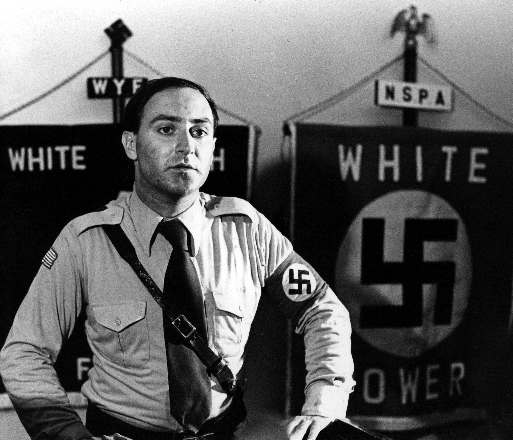
Think about how much of our economic development has been hampered by racist thinking: whole communities suffering from under-development because some banks, ran by people with racists views, refused to invest in them. Consider that the entire history of the Ku Klux Klan and Neo Nazi groups (like the one marching in Toledo, Ohio) can now be reevaluated as that of a group of mentally ill people.
If there's some resistance to this within the psychiatric community -- as is the case with Dr. Paul Fink -- it may be because they don't want their own racist thoughts to be called into question.
Look, anytime a person avoids sitting next to you on a train because you're black and male -- even when you're wearing a suit -- that's certainly a mental problem on the part of the person.
I once tried this as an experiment on BART's (Bay Area Rapid Transit) Concord-Bay Point line in 1995. I got on at Civic Center during rush hour, and sat down.
The seat next to me remained empty for the next four stops before the train reached the point where it goes under the waters of the SF Bay. This, even as the train was getting crowded with workers, mostly white. I got off at Embarcadero, the last SF stop, back tracked (got on a train going back to Civic Center, and did the same thing six times. Only once was my seat occupied, and that was by a white man.
I've noticed that as blacks have become more part of the work force in downtown SF, that problem has occurred less and less -- but it still does happen.
This has terrible impacts on the self-esteem of the people who have to deal with the behavior. In my case, my defense mechanism has been to believe that I was far more intelligent than the people who acted that way, and therefore didn't need their company. But to be ostracized for being black -- for something you not only have no control over, but like being -- is purely mentally unhealthy.
Why?
Think about the extra and unncessary energy racist people spend just to avoid people who are different. Think about the women in modern society who remain unmmarried because they can't find a person within a certain racial group, when the man best for them may not be "the right color."
A woman friend, white, once told me about the "Angry White Woman" problem in San Francisco, because if they met someone who was white and male, that person may be Gay, or married, and then the woman didn't want to really date anyone who was Black or Asian. So, she makes herself unhappy and almost suicidally depressed.
All of this because of a racial / ethnic fear.
Now, you're going to tell me that's mentally healthy? Ha!
Here's the story:
By Shankar Vedantam
Washington Post Staff Writer
Saturday, December 10, 2005; Page A01
The 48-year-old man turned down a job because he feared that a co-worker would be gay. He was upset that gay culture was becoming mainstream and blamed most of his personal, professional and emotional problems on the gay and lesbian movement.
These fixations preoccupied him every day. Articles in magazines about gays made him agitated. He confessed that his fears had left him socially isolated and unemployed for years: A recovering alcoholic, the man even avoided 12-step meetings out of fear he might encounter a gay person.
Darrel A. Regier of the American Psychiatric Association favors research but says it is not clear that establishing a diagnosis would be useful. (By Marvin Joseph -- The Washington Post)
"He had a fixed delusion about the world," said Sondra E. Solomon, a psychologist at the University of Vermont who treated the man for two years. "He felt under attack, he felt threatened."
Mental health practitioners say they regularly confront extreme forms of racism, homophobia and other prejudice in the course of therapy, and that some patients are disabled by these beliefs. As doctors increasingly weigh the effects of race and culture on mental illness, some are asking whether pathological bias ought to be an official psychiatric diagnosis.
Advocates have circulated draft guidelines and have begun to conduct systematic studies. While the proposal is gaining traction, it is still in the early stages of being considered by the professionals who decide on new diagnoses.
If it succeeds, it could have huge ramifications on clinical practice, employment disputes and the criminal justice system. Perpetrators of hate crimes could become candidates for treatment, and physicians would become arbiters of how to distinguish "ordinary prejudice" from pathological bias.
Several experts said they are unsure whether bias can be pathological. Solomon, for instance, is uncomfortable with the idea. But they agreed that psychiatry has been inattentive to the effects of prejudice on mental health and illness.
"Has anyone done a word search for 'racism' in DSM-IV? It doesn't exist," said Carl C. Bell, a Chicago psychiatrist, referring to psychiatry's manual of mental disorders. "Has anyone asked, 'If you have paranoia, do you project your hostility toward other groups?' The answer is 'Hell, no!' "
The proposed guidelines that California psychologist Edward Dunbar created describe people whose daily functioning is paralyzed by persistent fears and worries about other groups. The guidelines have not been endorsed by the American Psychiatric Association, which publishes the Diagnostic and Statistical Manual of Mental Disorders (DSM); advocates are mostly seeking support for systematic study.
Darrel A. Regier, director of research at the psychiatric association, said he supports research into whether pathological bias is a disorder. But he said the jury is out on whether a diagnostic classification would add anything useful, given that clinicians already know about disorders in which people rigidly hold onto false beliefs.
"If you are going to put racism into the next edition of DSM, you would have enormous criticism," Regier said. Critics would ask, " 'Are you pathologizing all of life?' You better be prepared to defend that classification."
"I think it's absurd," said Sally Satel, a psychiatrist and the author of "PC, M.D.: How Political Correctness Is Corrupting Medicine." Satel said the diagnosis would allow hate-crime perpetrators to evade responsibility by claiming they suffered from a mental illness. "You could use it as a defense."
Psychiatrists who advocate a new diagnosis, such as Gary Belkin, deputy chief of psychiatry at New York's Bellevue Hospital, said social norms play a central role in how all psychiatric disorders are defined. Pedophilia is considered a disorder by psychiatrists, Belkin noted, but that does not keep child molesters from being prosecuted.
"Psychiatrists who are uneasy with including something like this in the Diagnostic and Statistical Manual need to get used to the fact that the whole manual reflects social context," said Belkin, who is planning to launch a study on pathological bias among patients at his hospital. "That is true of depression on down. Pathological bias is no more or less scientific than major depression."
Advocates for the new diagnosis also say most candidates for treatment, such as the man Solomon treated, are not criminals or violent offenders. Rather, they are like the young woman in Los Angeles who thought Jews were diseased and would infect her -- she carried out compulsive cleansing rituals and hit her head to drive away her obsessions. She realized she needed help but was afraid her therapist would be Jewish, said Dunbar, a Los Angeles psychologist who has amassed several case studies and treated several dozen patients for racial paranoia and other forms of what he considers pathological bias.
Another patient was a waiter so hostile to black people that he flung plates on the table when he served black patrons and got fired from multiple jobs.
A third patient was a Vietnam War veteran who was so fearful of Asians that he avoided social situations where he might meet them, Dunbar said.
"When I see someone who won't see a physician because they're Jewish, or who can't sit in a restaurant because there are Asians, or feels threatened by homosexuals in the workplace, the party line in mental health says, 'This is not our problem,' " the psychologist said. "If it's not our problem, whose problem is it?"
Opponents say making pathological bias a diagnosis raises the specter of social engineering -- brainwashing individuals who do not fit society's norms. But Dunbar and others say patients with disabling levels of prejudice should be treated for the same reason as are patients with any other disorder: They would feel, live and function better.
"They are delusional," said Alvin F. Poussaint, a professor of psychiatry at Harvard Medical School, who has long advocated such a diagnosis. "They imagine people are going to do all kinds of bad things and hurt them, and feel they have to do something to protect themselves.
"When they reach that stage, they are very impaired," he said. "They can't work and function; they can't hold a job. They would benefit from treatment of some type, particularly medication."
Doctors who treat inmates at the California State Prison outside Sacramento concur: They have diagnosed some forms of racist hatred among inmates and administered antipsychotic drugs.
"We treat racism and homophobia as delusional disorders," said Shama Chaiken, who later became a divisional chief psychologist for the California Department of Corrections, at a meeting of the American Psychiatric Association. "Treatment with antipsychotics does work to reduce these prejudices."
* * *
Amid a profusion of recent studies into the nature of prejudice, researchers have found that biases are very common. Almost everyone harbors what might be termed "ordinary prejudice," the research indicates.
Anthony Greenwald, a psychologist at the University of Washington in Seattle, and Mahzarin R. Banaji, a psychologist at Harvard, developed tests for such biases. By measuring the speed with which people make mental associations, the psychologists found that biases affect even those who actively resist them.
"When things are more strongly paired in our minds, we can respond to them more quickly," Banaji said. "Large numbers of Americans cannot as swiftly make the association between 'black' and 'good' as they can between 'white' and 'good.' "
Similarly, psychologist Margo Monteith at the University of Kentucky in Lexington found that people can have prejudices against groups they know nothing about. She administered a test in which volunteers, under time pressure, had to associate a series of words with either "America" or a fictitious country she called "Marisat."
Volunteers more easily associated Marisat with such words as "poison," "death" and "evil," while associating America with "sunrise," "paradise" and "loyal."
"A large part of our self-esteem derives from our group membership," Monteith said. "To the extent we can feel better about our group relative to other groups, we can feel good about ourselves. It's likely a built-in mechanism."
If biases are so common, many doctors ask, can racism really be a mental illness?
"I don't think racism is a mental illness, and that's because 100 percent of people are racist," said Paul J. Fink, a former president of the American Psychiatric Association. "If you have a diagnostic category that fits 100 percent of people, it's not a diagnostic category."
But Poussaint said there is a difference between ordinary prejudice and pathological bias -- the same distinction that psychiatrists make between sadness and depression. All people experience sadness, anxiety and fear, but extreme, disabling forms of these emotions are called disorders.
While people with ordinary prejudice try very hard to conceal their biases, Solomon said, her homophobic patient had no embarrassment about his attitude toward gays. Dunbar said people with pathological prejudice often lack filtering capabilities. As a result, he said, they face problems at work and home.
"Everyone is inculcated with stereotypes and biases with cultural issues, but some individuals not only hold beliefs that are very rigid, but they are part of a psychological problem," Dunbar said.
The psychologist said he has helped such patients with talk therapy, which encourages patients to question the basis for their beliefs, and by steering them toward medications such as antipsychotics.
The woman with the bias against Jews did not overcome her prejudice, Dunbar said, but she learned to control her fear response in social settings. The patient with hostility against African Americans realized his beliefs were "stupid."
Solomon discovered she was most effective dealing with the homophobic man when she was nonjudgmental. When he claimed there were more gays and lesbians than ever before, she presented him with data showing there was no such shift.
At those times, she reported in a case study, the patient would say, "I know, I know." He would recognize that he was not being logical, but then get angry and return to the same patterns of obsession. Solomon did not identify the man because of patient confidentiality.
Standing in the central yard of the maximum-security California State Prison with inmates exercising around her, Chaiken explained how she distinguished pathological bias from ordinary prejudice: A prisoner who belonged to a gang with racist views might express such views to fit in with his gang, but if he continues "yelling racial slurs, assaulting others when it's clear there is no benefit" after he leaves the gang, the behavior was no longer "adaptive."
Prison officials declined to identify inmates who had been treated, or make them available for interviews.
Chicago psychiatrist Bell said he has not made up his mind on whether bias can be pathological. But in proposing a research agenda for the next edition of psychiatry's DSM of mental disorders, Bell and researchers from the Mayo Clinic, McGill University, the University of California at Los Angeles and other academic institutions wrote: "Clinical experience informs us that racism may be a manifestation of a delusional process, a consequence of anxiety, or a feature of an individual's personality dynamics."
The psychiatrists said their profession has neglected the issue: "One solution would be to encourage research that seeks to delineate the validity and reliability of racism as a symptom and to investigate the possibility of including it in some diagnostic criteria sets in future editions of DSM."
Former Sen. Eugene McCarthy, 89, Dies

(12-10) 13:16 PST WASHINGTON, (AP) --
Former Minnesota Sen. Eugene J. McCarthy, whose insurgent campaign toppled a sitting president in 1968 and forced the Democratic Party to take seriously his message against the Vietnam War, died Saturday. He was 89.
McCarthy died in his sleep at assisted living home in the Georgetown neighborhood where he had lived for the past few years, said his son, Michael.
Eugene McCarthy challenged President Lyndon B. Johnson for the 1968 Democratic nomination during growing debate over the Vietnam War. The challenge led to Johnson's withdrawal from the race.
The former college professor, who ran for president five times in all, was in some ways an atypical politician, a man with a witty, erudite speaking style who wrote poetry in his spare time and was the author of several books.
"He was thoughtful and he was principled and he was compassionate and he had a good sense of humor," his son said.
When Eugene McCarthy ran for president in 1992, he explained his decision to leave the seclusion of his home in rural Woodville, Va., for the campaign trail by quoting Plutarch, the ancient Greek historian: "They are wrong who think that politics is like an ocean voyage or military campaign, something to be done with some particular end in view."
McCarthy got less than 1 percent of the vote in 1992 in New Hampshire, the state where he helped change history 24 years earlier.
Helped by his legion of idealistic young volunteers known as "clean-for-Gene kids," McCarthy got 42 percent of the vote in the state's 1968 Democratic primary. That showing embarrassed Johnson into withdrawing from the race and throwing his support to his vice president, Hubert H. Humphrey.
Sen. Robert Kennedy of New York also decided to seek the nomination, but was assassinated in June 1968. McCarthy and his followers went to the party convention in Chicago, where fellow Minnesotan Humphrey won the nomination amid bitter strife both on the convention floor and in the streets.
Humphrey went on to narrowly lose the general election to Richard Nixon. The racial, social and political tensions within the Democratic Party in 1968 have continued to affect presidential politics ever since.
"It was a tragic year for the Democratic Party and for responsible politics, in a way," McCarthy said in a 1988 interview.
"There were already forces at work that might have torn the party apart anyway — the growing women's movement, the growing demands for greater racial equality, an inability to incorporate all the demands of a new generation.
"But in 1968, the party became a kind of unrelated bloc of factions ... each refusing accommodation with another, each wanting control at the expense of all the others."
Although he supported the Korean War, McCarthy said he opposed the Vietnam War because "as it went on, you could tell the people running it didn't know what was going on."
In recent years, McCarthy was critical of campaign finance reform, winning him an unlikely award from the Conservative Political Action Conference in 2000.
In an interview when he got the award, McCarthy said that money helped him in the 1968 race. "We had a few big contributors," he said. "And that's true of any liberal movement. In the American Revolution, they didn't get matching funds from George III."
After the attacks of Sept. 11, 2001, McCarthy said the United States was partly to blame for ignoring the plight of Palestinians.
"You let a thing like that fester for 45 years, you have to expect something like this to happen," he said in an interview at the time. "No one at the White House has shown any concern for the Palestinians."
London's Double-Decker "Routemaster" Buses Retired - I Never Got to Ride One!

After 53 years of services, the famous London "Routemaster" Buses are being retired. I'm unhappy, because I never got to ride one at all! Of course, I've not yet visited London.
Richard Pryor Passes at 65 - A True American Icon

I just walked in the house, turned on my TV set, and learned that Richard Pryor passed away at 65. CNN's interviewing his wife Jennifer.
Pryor was a seemingly permanent part of the Zeitgeist, and was a big part of my life growing up in Chicago and then here in Oakland. It kind of feels like a part of my life has been ripped away. He was battling MS.
Pryor used his humor to reflect on race relations at the time. But, and as Martin Scorsese said, it was a savage -- and I would add, honest -- humor. It made people think and talk about what was going on, particularly in the 70s.
As Spike Lee just said, "it comes at you quick: Ossie Davis, Richard Pryor-- we're losing giants."
Thursday, December 08, 2005
First the SF 49ers "Videogate", then The Racist Stanford Video Before "The Big Game" , Now The SF Police Video - All This Year. What's Going On?
At the start of 2005 the San Francisco Bay area was rocked by the revelation that the San Francisco 49ers created a racist and sexist "traning tape." Then, just before this year's Cal / Stanford "Big Game" a group of Stanford Students made a video said to be, again, racist and sexist. Now, the San Francisco Police Department's dark underbelly of racial intolerance is being exposed in the release of information on another video that is, yep, called racist and sexist.
Wait. This is the SF Bay Area, right? What's going on?
Well, my theory is that the kind of subtile racism Bay Area African Americans have always complained about has found its way into these videos and are quickly being exposed to the public in this Internet Age.
The fact that the general public was made aware of all three of theese videos just this year is no spritual accident, in my view. The arrows of policy and institutional reform point to the need to one-and-for-all solve this problem of racial intoleerance in our local institutions.
San Francisco Mayor Gavin Newsom should convene a Task Force on the Elimination of Racism and Sexism. I think it will be not only his most provacative action, but the most eye-opening. Mayor Newsom wiill find people and organizations running for cover or moving to prove that they are models of diversity and understanding. The effort would cut to the very core of San Francisco's culture and force the city -- and the Bay Area -- to take a hard look at itself.
Some will say that the videos "were all in fun" but that's the point: "fun" should not be obtained by hurting someone's feelings because they are minority, or female, or any person who -- until the last 30 years of economic advancement -- were not part of the socioeconomic mainstream. Yet, it seems to be some kind of sport in some circles to do this.
It's not right. Humor does not have to come from physical differences.
The San Francisco Bay Area should know better.
Wait. This is the SF Bay Area, right? What's going on?
Well, my theory is that the kind of subtile racism Bay Area African Americans have always complained about has found its way into these videos and are quickly being exposed to the public in this Internet Age.
The fact that the general public was made aware of all three of theese videos just this year is no spritual accident, in my view. The arrows of policy and institutional reform point to the need to one-and-for-all solve this problem of racial intoleerance in our local institutions.
San Francisco Mayor Gavin Newsom should convene a Task Force on the Elimination of Racism and Sexism. I think it will be not only his most provacative action, but the most eye-opening. Mayor Newsom wiill find people and organizations running for cover or moving to prove that they are models of diversity and understanding. The effort would cut to the very core of San Francisco's culture and force the city -- and the Bay Area -- to take a hard look at itself.
Some will say that the videos "were all in fun" but that's the point: "fun" should not be obtained by hurting someone's feelings because they are minority, or female, or any person who -- until the last 30 years of economic advancement -- were not part of the socioeconomic mainstream. Yet, it seems to be some kind of sport in some circles to do this.
It's not right. Humor does not have to come from physical differences.
The San Francisco Bay Area should know better.
Oakland Creates Another White Elephant - The Case of The Henry J. Kaiser Convention Center

You know, with so many Oakland-related posts, I may create another blog on Oakland-related matters. I just don't know what to call it. Until then..
The Henry J. Kaiser Convention Center is an enormous building that sits on the western shore of Lake Merritt, and opposite Laney College. It has an 8,000 seat arena, a 2,000 seat auditorium, and with all of that, the City of Oakland can no longer afford to keep in open. The Oakland Tribune reports the Oakland City Council made that decision Tuesday night.
11th-hour plan can't save center
Oakland council decides the city doesn't have the money to keep Kaiser open after Jan. 1
By Heather MacDonald, STAFF WRITER
OAKLAND — A last-minute proposal from a Chicago-based consulting firm and the Peralta Community College District will not save the Henry J. Kaiser Convention Center from being mothballed.
The Oakland City Council decided unanimously Tuesday night that the city simply does not have the money to keep the historic building's doors open after Jan. 1.
"We tried," said council President Ignacio De La Fuente (Glenview-Fruitvale), adding it would take a "miracle" to keep the center open.
Although International Facilities Group promised to operate the center with a subsidy of only $175,000, City Administrator Deborah Edgerly recommended the council reject the deal because the city would be on the hook if the center's performance failed to meet expectations.
IFG planned to rebrand the Kaiser center and make 10th Street Oakland's "Avenue of the Arts," tying together the Oakland Museum of California and Laney College.
The community college district would have used the center, which includes an 8,000-seat arena, the 2,000-seat Calvin Simmons Theater and two smaller ballrooms, as a performing arts center to showcase its theater and dance programs.
But the city would have had to give IFG, which was founded by the son of Chicago White Sox owner Jerry Reinsdorf, the center's $1 million budget up front, said Anne Campbell Washington, assistant to the city administrator.
"That puts all of the burden on the city," said Councilmember Pat Kernighan (Grand Lake-Chinatown). "We shouldn't risk all of our money."
Joseph J. Briglia, IFG president of business development, said the company would continue to work on a viable plan to keep the Kaiser center open, saying it is a valuable resource.
____________________________________________________________________________________________________________________
The City's never had a marketing plan for the facility, and I know the Convention and Visitor's Bureau could have determined a way to bring it into its efforts.
New Orleans East Side "A Wasteland" According to M. Barnett at www.mgno.com
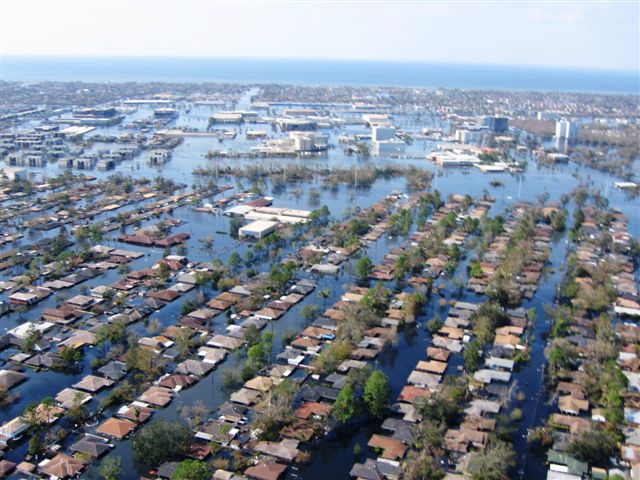
Post by: Michael Barnett at www.mgno.com:
I made it back to New Orleans on Thursday afternoon and here were my initial thoughts:
I started my 1996 Honda Civic EX's engine at 0100 EST. I rocketed up I-75 to I-10 and then headed west on 10 all the way in. At 0900 CST, I hit the Twin Single Span across the Lake. Moments later I realized that New Orleans will never be rebuilt in my lifetime.
New Orleans East cannot be described; it can only be seen. You must drive through it. What you see on television is nothing. Nothing. You have not seen devestation until you have driven through NOE. There is no life -- mammalian, avian -- nothing outside the plant kingdom (and whatever mold falls into). It is uninhabitable and must be bulldozed. This will take decades. Yes, the cleanup will take decades. In fact, it's likely that the cleanup will never be complete.
I fully expect New Orleans to be a mostly dead city until I am an old, old man, maybe in my late 60s or my 70s. My guess is that no place on Earth compares to the ghost town of New Orleans East. Maybe some cities in the former Yugoslavia were close during the recent clashes. Close. But there, people still lived. No one lives in New Orleans East.
It's been something like three months and most and perhaps even all of Carrollton Avenue still has no functioning street lights; neither does Earhart Expressway.
Unreal.
It has been a week now, and I've had a chance to drive all around the city.
All I can say is that this place is broken down. Crushed. Demolished.
It is a moral lapse of the first order for politicians to keep telling people to come back. I am going to take some flack for telling the truth, but since that's what this blog is for, that's what I'm going to do. New Orleans is a wasteland. Sure, there are a lot of contractors out there trying to clean up, but it's barely making a dent.
You have to see it in person to understand. There are MASSIVE dead areas. Areas of several square miles which will have to be completely torn down. Hell, they ARE STILL FINDING BODIES in some areas.
The idea that this city is going to try to do Mardi Gras boggles the mind.
Anyway, a close friend of mine is trying to do the Lord's work in another brutalized area along the Gulf Coast. You can read what he's got to say in the email at the bottom of this entry. If you can do anything to help, it will be greatly appreciated. There is a link to the school and my friend's email included. Please help if you can.
From: eli lucas
To: Michael Barnett
Michael,
As per our conversation last weekend, I'm writing regarding
St. Clare Elementary School of Waveland, Mississippi. St.
Clare's beach-front location on the Gulf was in the direct
path of Katrina's greatest destruction. The school was
totally devastated - washed from the surface of Earth;
albeit their recovery thus far is amazing.
While New Orleans evacuees complain from afar about the lack
of improvement in New Orleans, St. Clare Elementary is
returning to business. To date approximately 85% of their
student body returned to class. St. Clare is neither
waiting for the FEMA elf, nor any other governmental agency
to rebuild their paradise. Funded solely by private
donations, St. Clare's new home consists of nineteen white
tents surrounded by total devastation. The link to their
website is http://www.stclareelementary.org.
Continued progress at St. Clare is not without costs.
Although the limited amount of tuition revenue thus far
fails to meet salary expenses, St. Clare accepts everyone
regardless of their ability to provide tuition. I hope your
readers will consider assisting in this remarkable
renaissance in Waveland. Donation information is included on
their web site.
Thank you for your help in this matter.
Regards,
Eli
New Orleans Police Misused Federal Funds - From "The Dead Pelican"

Police Commissioner Kevin Riley shown
According to the Dead Pelican website, the controversial New Orleans Police department deliberately overstated the number of officers to be paid by the federal government, and then gave more money to "connected" officers.
Here's the account from their website:
FEDS ASKING TOUGH QUESTIONS OF NOPD: INDICTMENTS PREDICTED XXXX DECEMBER 03, 2005 5:27 PM
**EXCLUSIVE! MUST CREDIT THE DEAD PELICAN!**
In the wake of Hurricane Katrina, the Feds are asking a number of very specific questions of the NOPD, sources tell The Dead Pelican. Among the questions that the Feds are asking, one stands out: "Where are all these officers that we were paying you for?"
As reported earlier, it is widely known that NOPD's real troop strength has never been more than approximately 1000 commissioned officers but the "official" number (that is, the number given out by the Superintendent's office) has always been 1500 to 1700.
But The Dead Pelican has learned that the actual numbers are quite different.
The Dead Pelican has learned that the NOPD has been taking Federal money supposedly earmarked for hiring and training officers, and using it for things like overtime for "connected" officers, rather than hiring new officers.
And, of course, there is the "phantom officer" situation, that is, "officers" who drew and cashed paychecks but cannot be found to exist.
So now there is a lingering question: where did the money go? "Something this widespread and blatant can't go on without the Superintendent's knowledge and implied consent," said a source.
Insiders say that indictments are inevitable...
Developing...
----------------------
by Chad E. Rogers
DECEMBER 03, 2005
(c)THE DEAD PELICAN
http://www.thedeadpelican.com for updates
Sometimes I Think People Reserve Their Worst Behavior For You When You're Black and Male
Tonight, I just went down to The Alley, a local bar and piano establishment I visit, to have a good, basic chicken dinner. I didn't feel like cooking, and had enough of pot roast, steaks, and pasta. I wanted chicken.
Jackie, the owner and bartender, had my place read for me to sit -- and the meal prepared -- when I arrived. Ok. I was late, but I got there. So, I sat down to eat and to my joy, the Warriors basketball game was on. So, I was content, but I had one call to make, and it was an important one, so I got my cell phone to take action.
While I'm on the phone, someone yells "What's your name" and just as I'm getting up to go outside to hear the recording better. I motion that I'm on the phone, and go out. When I returned, I sat down to eat the meal I ordered. The matter of what the other person wanted to know seemed a distant memory to me -- not important.
So, I ate. Then, after a while, the person who was yelling at me, who turned out to be an older African American woman, again yelled -- yelled, "Married or Single?" And repeated it. So, I slowly turned and said "I'm eating and watching the Warriors" with a wink of an eye. She said some other words I didn't bother to comprehend, because I just wanted to eat -- ya know? As this is going on, Jackie's going back and forth pouring patrons drinks.
Finally, the lady asks Jennifer, who's the waitress, to tap me on the shoulder -- "The Black Man. Him," she says. So, I turn, and she asks me "What country are you from?" Well I was now deep in the middle of watching "The Best Damn Sports Show" and waiting for the segment featuring my friend, Fox Sports Analyst Jay Glazer. So, I was a bit annoyed, but said nothing. My gut told me that responding would not help matters and I just wanted to be left alone. Besides, something appeared to be wrong with her -- maybe it was the alcohol.
So after a while, she was finally leaving -- I guess -- but then doubled back and forced herself into my attention because she "Had something to say to me." I wanted to be left alone. I asked her -- several times -- to stop bothering me. I finally asked Jackie -- who seemed to be trying to ignore the whole thing. Finally I threatened to call the cops -- it was that bad. I told Jackie it was either her or me who would do so. All the time, this lady is yelling, and I'm asking her to stop and just leave. Wild.
Finally, she left.
What I didn't like was that because I'm a guy and black, it seems like it's OK if I get harassed. I really got after Jackie for allowing that to happen. Jackie felt there was nothing that she could do; that the lady was going to do what she wanted to do. But she could have asked the lady to stop.
About two years ago, I was at The Alley with my friend Setor, when a drunk white lady started saying all kinds of racist and offensive things. Eventually, she was asked to leave. That's what Jackie should have asked this lady to do.
I later learned that it was her birthday. But she certainly didn't do anything to make it a happy one for her and anyone else. Certainly not me.
Folks, if you see someone black and male being harassed for no good reason, jump in. Don't just let it happen. In my case, I was ready to send that lady to jail because her actions were so very threatening and unnecessary. And I would not begin to think of using violence -- calling the police was the best alternative.
I didn't like the scenario of someone black calling the police on someone else black and female, but the lady's behavior was so -- wild -- it was the only reasonable action to take. No one else seemed interested in stopping her,and I'm still puzzled by the whole thing.
Jackie, the owner and bartender, had my place read for me to sit -- and the meal prepared -- when I arrived. Ok. I was late, but I got there. So, I sat down to eat and to my joy, the Warriors basketball game was on. So, I was content, but I had one call to make, and it was an important one, so I got my cell phone to take action.
While I'm on the phone, someone yells "What's your name" and just as I'm getting up to go outside to hear the recording better. I motion that I'm on the phone, and go out. When I returned, I sat down to eat the meal I ordered. The matter of what the other person wanted to know seemed a distant memory to me -- not important.
So, I ate. Then, after a while, the person who was yelling at me, who turned out to be an older African American woman, again yelled -- yelled, "Married or Single?" And repeated it. So, I slowly turned and said "I'm eating and watching the Warriors" with a wink of an eye. She said some other words I didn't bother to comprehend, because I just wanted to eat -- ya know? As this is going on, Jackie's going back and forth pouring patrons drinks.
Finally, the lady asks Jennifer, who's the waitress, to tap me on the shoulder -- "The Black Man. Him," she says. So, I turn, and she asks me "What country are you from?" Well I was now deep in the middle of watching "The Best Damn Sports Show" and waiting for the segment featuring my friend, Fox Sports Analyst Jay Glazer. So, I was a bit annoyed, but said nothing. My gut told me that responding would not help matters and I just wanted to be left alone. Besides, something appeared to be wrong with her -- maybe it was the alcohol.
So after a while, she was finally leaving -- I guess -- but then doubled back and forced herself into my attention because she "Had something to say to me." I wanted to be left alone. I asked her -- several times -- to stop bothering me. I finally asked Jackie -- who seemed to be trying to ignore the whole thing. Finally I threatened to call the cops -- it was that bad. I told Jackie it was either her or me who would do so. All the time, this lady is yelling, and I'm asking her to stop and just leave. Wild.
Finally, she left.
What I didn't like was that because I'm a guy and black, it seems like it's OK if I get harassed. I really got after Jackie for allowing that to happen. Jackie felt there was nothing that she could do; that the lady was going to do what she wanted to do. But she could have asked the lady to stop.
About two years ago, I was at The Alley with my friend Setor, when a drunk white lady started saying all kinds of racist and offensive things. Eventually, she was asked to leave. That's what Jackie should have asked this lady to do.
I later learned that it was her birthday. But she certainly didn't do anything to make it a happy one for her and anyone else. Certainly not me.
Folks, if you see someone black and male being harassed for no good reason, jump in. Don't just let it happen. In my case, I was ready to send that lady to jail because her actions were so very threatening and unnecessary. And I would not begin to think of using violence -- calling the police was the best alternative.
I didn't like the scenario of someone black calling the police on someone else black and female, but the lady's behavior was so -- wild -- it was the only reasonable action to take. No one else seemed interested in stopping her,and I'm still puzzled by the whole thing.
Wednesday, December 07, 2005
President Bush' Holiday Cards Rile Conservatives- Only Say "Happy Holidays" - Wash Post
Perhaps the better text to write should have been "Merry Christmas and Happy Holidays." I'm not a conservative, but I do believe in God and celebrate Christmas. However, there are many ways to believe, and we should never forget that.
Monday, December 05, 2005
Oakland Mayor Jerry Brown Angers Members of Oakland's Black Political Community

This article from the Oakland Tribune appeared today and sheds light on only part of the real problem. In 2000, I accused Jerry of having problems relating to young, intelligent African Americans who didn't fit a stereotype. I was referring to how he treated me as I headed Oakland's Super Bowl Bid.
The story is part of Oakland legend now, but what Jerry did was constantly ignore -- or attempt to avoid -- me and the matter of the Super Bowl, until he realized it was generating good press. Then, and too late, he jumped on the bandwagon. Prior to that, Jerry would tell me he "didn't have time for me" and other comments.
That didn't stop me from pressing the issue of Oakland's Super Bowl Bid, but his behavior was more than annoying most of the time. I think that deep down, Jerry thinks of himself as "intellectual" in a way that's classically race - based , where people he looks to most of the time fit a kind of mold.
That written, I don't think Jerry wants to be this way, or be regarded as having this problem, but he's not found the proper way to avoid it. Really, all it takes is making people feel special in his presence, as Bill Clinton does. In other words, Bill Clinton really enjoys African American people and culture, where Jerry in my experience seems somewhat disinterested in both. I wish he'd change, for his own good.
African-American leaders seething over Brown
Letter to mayor charges their community has been shut out economically and politically
By Heather MacDonald, STAFF WRITER
OAKLAND — The long-simmering animosity between Mayor Jerry Brown and some African-American leaders bubbled over last week when several sent Brown a letter accusing him of harming Oakland's black community.
The informal group, which includes former Councilmember Dezie Woods-Jones and school board member Greg Hodge, said they sent the letter "to express our profound disappointment with your stewardship of the mayor's office and the resulting negative impact on the health, welfare and vitality of Oakland's black community."
Brown, who is running for state attorney general, dismissed most of the complaints as without merit. Other charges are just a rehashing of old grievances, he said.
"I don't even know how to respond to such misinformed and inaccurate charges," Brown said, adding that he does not think the letter represents the views of the majority of Oakland's African-American residents.
The letter lays out five specific criticisms against the mayor that center on the belief black-owned firms have been shut out of lucrative municipal contracts and the African-American community's leaders are not consulted on issues facing Oakland.
"It's a wake-up call from a large portion of his constituents who feel completely left out of the process," said Hodge, who wrote the first draft of the letter.
Brown acknowledged political differences with members of the group,
especially over development issues such as affordable housing and the push to require community development agreements as part of large projects.
"There are real philosophical issues," Brown said. "But they are not racial. They're political. They're economic."
William "Bill" Patterson said dozens of black-owned companies have gone out of business because they haven't been able to obtain city contracts.
"There's still ample opportunity for Brown to respond to these issues," Patterson said. "It's late in the game, though."
Brown said an ongoing study will determine whether African-American, Latino and Asian companies are getting their fair share of the city's contracts. That study is expected to be completed next year.
"There is not one shred of evidence" proving black companies have been shut out of City Hall, Brown said. "It's preposterous."
Joseph Debro of the National Association of Minority Contractors and a frequent critic of the mayor, said he signed the letter because he was tired of Brown escaping criticism.
"I don't understand why no one calls him on the rampant cronyism and corruption of his administration," Debro said, criticizing Bay Area media outlets for not being more aggressive in covering the mayor.
The letter's harshest criticism is directed at Brown's handling of the months-long dispute over $575,000 in federal job training funds. It blasts Brown for backing a proposal from Council President Ignacio De La Fuente to take the funds from the $3.2 million allocated to the Oakland Private Industry Council and use it for programs focused on ex-offenders.
Originally, De La Fuente (Glenview-Fruitvale) tried to give the $575,000 directly to two of the most prominent houses of worship in East Oakland — Acts Full Gospel Church and Allen Temple Baptist Church. His effort was thwarted after City Attorney John Russo ruled federal funds could only be allocated after a competitive bid process, and with the concurrence of the city's Workforce Investment Board, the council and the mayor.
The letter calls Brown's support of De La Fuente's action "highly troubling" for someone who wants to be California's next attorney general and denounces the mayor for disrespecting the black leadership of the Workforce Investment Board.
Although De La Fuente said his aim is to spread the city's scarce job training resources to all areas of the city, his critics have accused him of violating federal law in an effort to boost his bid to become Oakland's next mayor, and in the process, pitting the black community against itself.
Brown said he understood some of the group's concerns and had been working as a "peacemaker" to diffuse conflict.
"Whenever you hand out a government contract, people fight hard to get it and keep it," Brown said.
Brown said he expects a compromise will be reached in the next several weeks to end the stalemate about the job training funds.
The deal is likely to include a provision to give $300,000 to Acts Full Gospel Church for its Men of Valor program. Earlier this month, Allen Temple Baptist Church received a $660,000 grant from the U.S. Department of Labor, and withdrew its informal request for federal job training funds from the city.
Although the job training funding dispute is on its face a quarrel about a relatively small amount of money, it has crystallized the frustration felt by many in the African-American community during Brown's seven years as mayor.
"It was the tipping point," Hodge said. "These are hard, intractable issues and you want your city's mayor to lead."
As the dispute about job training funds heated up this fall, many of those outraged by De La Fuente and Brown's actions began a campaign to urge former Congressman Ron Dellums to run for mayor. They succeeded.
Many of Dellums' backers — who are quick to note he has broad support throughout Oakland — say they believe he will be a progressive mayor and more inclusive than Brown.
"There have been too many backroom deals, too much cronyism, too many insider deals," said Hodge, who dropped out of the mayoral race after Dellums announced his candidacy.
First Review of Peter Jackson's "King Kong"

If this review is any indication (click on the post link to read it), Peter Jackson's "King Kong" will not only sweep the Oscars, collecting best picture and best director awards, in addition to a slew of technical nods for editing, sound, and cinematography, but it will be regarded as a modern classic. I can't remember when a sci-fi/monster/horror movie has been so effectively formed into a true Oscar contender.
I still think the first Godzilla film deserves a dedicated remake as well. It had much to say regarding technology, war, and nationalism. Moreover, like the original "King Kong", the first Godzilla movie's special effects are still remarkable.
A Great SF / Oakland Bay Area Weekend - Society's Changing
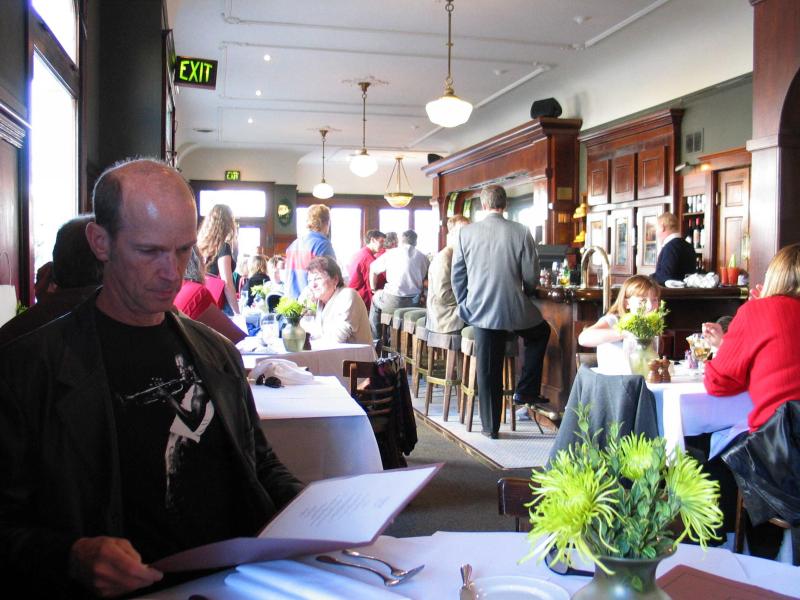
I write to report a weekend in the San Francisco Bay Area. On Saturday, I spent most of my time watching the UCLA / USC game at The Balboa Cafe. Then I went over to The Grove -- a great indoor / outdoor cafe on Chestnut and Avila that I discovered for myself when I was taking a screenwriting class at Fort Mason. After that, I went to the home of my good friends Bob and Barbara to help them trim their Christmas Tree. But what I loved about the day so much was how nice everyone was. The holiday and Christmas sprit was certainly in the air. Moreover, it made me very happy to be in the San Francisco Bay Area and to be an Oakland resident.
I write that society here is changing in that I observe the Bay Area's maturing to a level of social interaction that's certainly hyper-integrated, and yet it not only doesn't matter, people actually want to know each other. Heck, maybe it was an planetary alignment, but I don't think so. Bay Area society has moved in this direction slowly over the past 20 years. It may also be a statement of how life in urban America is changing, since people in our country are so mobile.
Sunday, December 04, 2005
Toledo Ohio To "Host" Neo - Nazi "White Supremacists" March Again - Why?
I discovered this news on Fox Television. There's also a rather sick individual who has nothing better to do than write a blog entirely devoted to this matter. Anyone holding or participating in "white race" marches is certainly free to do so in America, but let's face it folks. The practice is sick.
The Neo-Nazis are not contributing anything good to America. The time they will spend doing this could be better invested in volunteering at the local humane society, or cooking meals to serve those who can't afford them, or writing a business plan to start a new company.
There's a reason people like Bill Gates go on to establish successful companies like Microsoft, while this group complains about -- nothing really. By contrast, the Bill Gates of the world are far too busy creating things to worry about what someone else looks like.
The Neo Nazi's want someone to give them something. They're too afraid to really get out in America, be a positive force in society, and really help make others happy. Why? Because they don't feel good about themselves.
People like this are dangerous to good humans like you and me. Their hate is so great that they would seek to threaten the very lives of others who don't look like them. The Toledo Police should arrest this group the very moment they make any kind of threat to anyone. As far as I'm concerned this organization is full of criminals. They should be watched at all times of the day and night.
Note. I've never been to Toledo, Ohio, and never plan to go. Moreover, any intelligent person should not waste their time visiting the city.
What does the Toledo Chamber of Commerce think of all this? Is the city's economy so great, it can stand this kind of crap?
According to this news report the very state of Ohio had the largest increase in unemployed workers of any state in America. Toledo has a near 7 percent rate of people out of work and at about $32,000 has a household income below the national average by about $10,000. It's 70 percent white and just over 20 percent black. So the city is mostly poor and Caucasian, which is why the Neo-Nazis are there, claiming "take your city back?"
It just goes to show you how stupid the Neo Nazis are to say to whites "take your city back" when Caucasians are the majority population. But one could never accuse the Neo Nazis of being logical in thought.
So it's no wonder Toledo's a haven for people who hate: they're unhappy with themselves and feel that someone else has what they don't have. (Well, I guess that's true if one considers self-esteem.) I do hope the normal people in that town -- black and white -- ban together and fix that city before it's too late.
The Toledo Regional Growth Partnership is attempting to "sell" that city as a great place for tech workers. They can't even dream of successfully doing that with Neo-Nazis running around. It's a proven fact that tech innovation happen in cities where everyone is welcome and a diverse society is not only expected, but wanted.
That's certainly not Toledo, Ohio. That city has to get with the program.
The Neo-Nazis are not contributing anything good to America. The time they will spend doing this could be better invested in volunteering at the local humane society, or cooking meals to serve those who can't afford them, or writing a business plan to start a new company.
There's a reason people like Bill Gates go on to establish successful companies like Microsoft, while this group complains about -- nothing really. By contrast, the Bill Gates of the world are far too busy creating things to worry about what someone else looks like.
The Neo Nazi's want someone to give them something. They're too afraid to really get out in America, be a positive force in society, and really help make others happy. Why? Because they don't feel good about themselves.
People like this are dangerous to good humans like you and me. Their hate is so great that they would seek to threaten the very lives of others who don't look like them. The Toledo Police should arrest this group the very moment they make any kind of threat to anyone. As far as I'm concerned this organization is full of criminals. They should be watched at all times of the day and night.
Note. I've never been to Toledo, Ohio, and never plan to go. Moreover, any intelligent person should not waste their time visiting the city.
What does the Toledo Chamber of Commerce think of all this? Is the city's economy so great, it can stand this kind of crap?
According to this news report the very state of Ohio had the largest increase in unemployed workers of any state in America. Toledo has a near 7 percent rate of people out of work and at about $32,000 has a household income below the national average by about $10,000. It's 70 percent white and just over 20 percent black. So the city is mostly poor and Caucasian, which is why the Neo-Nazis are there, claiming "take your city back?"
It just goes to show you how stupid the Neo Nazis are to say to whites "take your city back" when Caucasians are the majority population. But one could never accuse the Neo Nazis of being logical in thought.
So it's no wonder Toledo's a haven for people who hate: they're unhappy with themselves and feel that someone else has what they don't have. (Well, I guess that's true if one considers self-esteem.) I do hope the normal people in that town -- black and white -- ban together and fix that city before it's too late.
The Toledo Regional Growth Partnership is attempting to "sell" that city as a great place for tech workers. They can't even dream of successfully doing that with Neo-Nazis running around. It's a proven fact that tech innovation happen in cities where everyone is welcome and a diverse society is not only expected, but wanted.
That's certainly not Toledo, Ohio. That city has to get with the program.
Thursday, December 01, 2005
Why Am I Reading What David Brooks Thinks?

Ok. He has a column on Irag as the begining of "American Skepticism" but why am I being encouraged to read his take? How did his view become "the one." Is this the NY Times PR machine at work? Someone tell me. Please.
Subscribe to:
Posts (Atom)