Monday, March 27, 2006

Debra Lafave - "Where was Debra Lafave When I Was In Junior High School?" - A Provacative Article I Found: Sick Florida Cops Take Pictures of Her


The article I found and both linked to and posted below is the definitive work on the case of Debra Lafave. The author is David Steinberg, and his text file is buried so deep in their directory it would suffer the indignity of a very low Google search rating -- until now. This post will most certainly turn up in searches. I'll see to that.

David Steinberg should be congradulated for giving this case the true "face" it needs. In what you're about to see, both Ms. Lafave and her student come across as...human. People who have not just the "hots" for each other, but a true interest fueled by a surprisingly immature and naive collective view of what they were doing.

While she's 25 it could be argued that she's not much beyond 17 in her development.

What's equally shocking is the little-known revelation that the Florida cops in the prison where she was held took pictures of her private parts while she was in stirups. That alone should be grounds for their dismissal, but it didn't happen; the cops still have jobs. Unreal. Sick. Wild. And shocking.

Also, the statistics he sites are shocking. But read the text.


Here's the article:

BEYOND PREDATORS AND VICTIMS: THE NOT-SO-SENSATIONAL STORY OF DEBRA LAFAVE AND HER 14-YEAR-OLD STUD (view all columns)
[ Comes Naturally ] - 01.20.06 - by: David Steinberg
(email this article to a friend)

Boy: So what time are you planning on heading over?

Debra: Are you sure? Like, I just feel...I mean, I don't want you lying to your mom. I mean, it's like...

Boy: No, it's all right. She's gone in a sales meeting, like all day.

Debra: You're sure?

Boy: Yeah.

Debra: All right. Promise?

Boy: Yeah.

Debra: Pinky promise!

Boy: Yes.

Debra: Say pinky promise.

Boy: Pinky Promise.

Debra: All right. Well, tell me a time.


On June 21, 2004, police in Temple Terrace, Florida, a suburb of Tampa, arrested Debra Jean Beasley Lafave, then 23 years old, a strikingly attractive remedial reading teacher at Greco Middle School. She was charged with four counts of lewd and lascivious battery against a minor and one count of lewd and lascivious exhibition.

Lafave had been engaged in a brief but consuming sexual relationship with one of her 14-year-old students. She and her student had sex five times, all within a week of the time Lafave was arrested. They had sex at Lafave's home, in her classroom, and three times in the back of her SUV while the car was being driven by the student's intrigued and impressed 15-year-old cousin.

"It was awesome!" the student exulted unambiguously to his cousin immediately after one of the sexual drive-arounds, while Lafave was in the bathroom. Sex with Lafave was the first time the student had had intercourse, according to his statement to police.

Awesome or not, Lafave could have been sentenced to up to 75 years in prison and fined $50,000 if convicted on all five counts. Her lawyer, John Fitzgibbons, initially announced to a fascinated world press that he planned to enter an insanity plea in her defense. "Debbie has some profound emotional issues that are not her fault," he explained. Lafave's older sister and close confidante, five months pregnant, had been killed by a drunk driver in an automobile accident three years earlier. According to testimony by Lafave's mother, in the wake of her sister's death "Debbie [has been] pretty much of a basket case."

In the end, Fitzgibbons chose to negotiate a plea bargain rather than go to trial. Neither Lafave, nor the student, nor the student's mother, nor County Prosecutor Mike Sinacore, wanted to endure the circus of a media-blitz trial. On November 22, 2005, Hillsborough County Circuit Court Judge Wayne Timmerman accepted a plea bargain agreement negotiated by Fitzgibbons and Sinacore, an agreement that set off a new flurry of press excitement because it allowed Lafave to avoid serving any prison time. Lafave, her lawyer argued, was simply too attractive to be put in jail.

"To place Debbie into a Florida state women's penitentiary," Fitzgibbons said, "to place an attractive young woman in that kind of hellhole, is like placing a piece of raw meat in with the lions. I don't think Debbie could survive it."

Judge Timmerman apparently agreed.

Lafave pleaded guilty to two counts of lewd and lascivious battery for which she was sentenced to three years of partial house arrest (a nightly curfew from 10 pm to 6 am), followed by seven years of probation. She was also required to complete an outpatient sex offender program, pay for the cost of any psychological treatment for the student, avoid contact with the student, stay away from places where kids congregate, and not possess any pornographic, sexual, or obscene material.

All parties to the case were pleased. The student's mother, in particular, was happy to see an end to the media celebrity that she seemed to feel was more of a problem for her son than the fact that he had had sex with Lafave.

"It's a very big distraction for him at school," the mother told Tampa television station WTSP. "He just wants to focus on school and having fun with his friends, and just living a normal life."

Speaking to the Lakeland (Florida) Ledger she repeated, "He deserves to have a chance to live a normal life, graduate high school and then move on to college without everyone knowing him as the 14-year-old boy in the Lafave case."

Asked how she felt about Lafave, the mother responded that she had forgiven her son's teacher, adding, "I pray she gets the help she needs."

Indeed, no one involved in the case seems to wish Debra Lafave any harm. Her husband, Owen, to whom she been married only 11 months when she became involved with the student, told Larry King, "I don't wish her any ill will....She was an excellent teacher. She was very well respected. She had received awards based on her teaching ability....She's very compassionate. She's a very sweet person, intelligent and obviously beautiful. There's a lot of great qualities about Debbie. That's why I married her....I hope she doesn't go to jail." He was, however, suing her for divorce.

Unfortunately for everyone who wanted to put the tempestuous affair behind them, the Hillsborough County plea bargain was not to be the end of Debra Lafave's legal story. Because Lafave and her student had sex in two counties, Marion County (Ocala) Circuit Court Judge Hale R. Stancil needed to approve Lafave's plea bargain as well.

On December 8, Stancil, known for being tough on defendants, rejected the plea bargain, and set April 10, 2006, as the date for Lafave's trial. Beauty, it seems, can cut both ways in courts of law. Ocala defense attorney Charles Holloman was not surprised by Stancil's stern ruling.

"Every time I have had an attractive white woman [client] and there has been a chance of jail time," he told The Ocala Star-Banner, "Stancil throws her under the bus."

* * * * *

The case of the beautiful young teacher and her enthusiastic, even-younger student has captured the erotic imagination of a good deal of the national and international press, and the erotic fantasies of a good number of American males as well.

Google Zeitgeist reports that, for the weeks ending November 28, December 5, and December 12, 2005, Debra Lafave ranked first, sixth, and fifth among all gaining Google queries -- outpolling such then-hot topics as Xbox 360, box office hit "Chronicles of Narnia" and Oscar hopeful "Brokeback Mountain."

If surfing the extensive network of Debra Lafave-infatuated websites and chat rooms provides any indication of how American men feel about Debra Lafave having sex with her student, the feelings of American men can be summed up in one, rather simple, collective thought: "Where was Debra Lafave when I was in junior high school?" Lafave's young student, rather than being perceived as the victim of a predatory adult, seems to have become one of the most envied males in the country.

"If they had 'em like that when I was in school I would have failed the eighth grade, several times, on purpose!" exults one respondent in The Boston Herald's Talk Back section.

"All of my female teachers in high school looked like Ernest Borgnine...This kid hit lotto!" says another.

"Remember when you were in high school, fantasizing about that one afternoon where your hot Spanish teacher would keep you after class got out and the two of you would have wild, passionate sex right on her desk? Well this kid actually fucking did it! He had sex with the hot teacher!" swoons a blogger on ThisIsWhatWeDoNow.com

"This lucky 14-year-old little bastard got to knock boots with his fantasy teacher," notes a blogger in The Toronto Globe and Mail. "Lucky little [expletive deleted]."

Sensational stories about Debra Lafave and her student quickly spread throughout the national and international press, focusing as much on Lafave's appearance as anything else. Photos of a bikini-clad Lafave sitting rather demurely astride a motorcycle were publicized widely. Tales of a sexual relationship between her and another woman were publicized, denied, and confirmed.

Officers of the Temple Terrace Police Department proved to be as susceptible to Debra Fever as their non-professional counterparts. While Lafave was in custody, three detectives from her case arranged to have a series of nude photographs taken of her -- close-ups of her genitals (described meticulously in one police report as "a shaved pubic area leaving a strip of hair") while Lafave was in stirrups. The officers allegedly intended to shoot a series of close-ups of her breasts as well, but were interrupted before that could occur.

It was only when Lafave's attorney learned of the photos and complained to Judge Timmerman that the photos were seized and sealed. Under Florida's liberal public access laws, they would otherwise have been available to any and all interested parties, which is to say they would have been all over the Internet.

"The officials from the Temple Terrace Police Department took photos of the genital area of my client," Fitzgibbons angrily told an attentive and fascinated press. "Very explicit photos, pornographic photos, and then attempted to photograph her breasts...She's not even safe with the police."

The media, delighted to have new lurid details in the case, were given yet more grist three days later when one of the detectives who authorized the photos of Lafave was arrested during a sting operation by Tampa police, allegedly offering a woman $140 for sex.

* * * * *

Public appreciations of the supposed good fortune of Lafave's 14-year-old student turn out to be very much in tune with the student's own view of his situation. Statements taken by police from both the student and his cousin show that both boys considered themselves to be blessed, and certainly far from victimized, by their contact with Lafave, at least until they got caught.

In his statement to police, the student notes that he was pleased when Lafave began paying special attention to him toward the end of the school year. At first, he told police, he and Lafave had what he called a "hi/bye" relationship. The student told police he sat next to his attractive teacher on one school field trip. "They talked," he said, "nothing exciting. Just them getting to know each other." The two got to know each other more at a student's party on the last day of school, to which a number of teachers were invited. Lafave was the only teacher who showed up.

Lafave invited the student to spend time in her classroom after school, which he often did. She gave the student her cell phone number. One time, in her classroom after school, Lafave told the student "she had been thinking about him a lot and had feelings that made her smile when she thought of him." They kissed for the first time.

The student called his cousin and close friend to tell him about the "hot teacher" at school who liked him. The cousin told the student he didn't believe him. The student said he would prove it.

Thus it was that, when the student and Lafave decided to have sex for the first time, the student arranged for them to first pick up his cousin in Ocala -- 100 miles away -- and bring him along to Lafave's apartment in suburban Tampa. The cousin watched a video downstairs while Lafave and the student had sex in her upstairs bedroom (oral sex -- Lafave was having her period). Afterwards, all three watched television together before taking the cousin home to Ocala. On the way back to Ocala, the student and Lafave had oral sex again in the back of the car, while the cousin drove. Early the next week, Lafave and the student arranged for the cousin to drive Lafave's SUV around Ocala on two separate occasions while the student and Lafave had intercourse in the back.

Indeed, the student and Lafave only had sex one time without the cousin. That was in Lafave's classroom when Lafave "sat down next to [the student] and asked him if he wanted to have sex. He told her he did. While he was sitting on the couch she straddled him, facing him, and asked him if he was sure. He said yes."

Both boys were clearly excited by the whole caper. Their statements to police are peppered with references to "hot teacher" Lafave. It was when the cousin's mother overheard her son excitedly telling a friend about the student and his "hot teacher" that she first got wise to what was going on. She confronted the cousin who first lied but then confessed. The cousin's mother called the student's mother who confronted the student. The student admitted that he had been having sex with Lafave. Presumably he didn't tell his mother how "hot" Lafave was, or how "awesome" the sex. The student's mother called the police and the party was definitely over.

Up against both his mother and the Temple Terrace police, the student cooperated in trying to get Lafave to incriminate herself on the phone. The student called Lafave several times in the next few days, asking questions designed to get her to acknowledge that they had had sex, while the police recorded the calls. Perhaps the student was bad at entrapment. Perhaps he didn't really want Lafave to get busted. In any case, Lafave does not say anything unambiguously incriminating on the phone. Portions of the tape, released by the police, quickly became available on the Internet, along with a complete police transcript of the recorded calls.

On the tape, Lafave sounds surprisingly young, even younger than the student. She expresses concern for the student several times, not wanting to put him in a situation where he has to lie to his mother for them to be able to meet. She asks him, "Are you ok?" and "What's the matter?" and "Did you miss me last night?" She calls him "honey" and "my dear."

She asks if he enjoyed himself the last time they had sex. (He assures her he did.) She asks, "Are you freaking out?" and "Everything's good with you?" and "Everything's cool?" She asks about his well-being so often that the student gets perturbed. "I'm just making sure you're all right," she explains.

She talks about how she called the student's mother the night after their last sexual encounter, apologizing for keeping him out late. She tells how she told her husband "pretty much the whole story...except, you know, why we went to Ocala." She notes that her husband "actually gave me advice on what to say to your mom." She asks if the student had gotten to play in the school basketball game after their sexual encounter (he did), and if he had had a hard time concentrating on the game. ("A little," the student admits, adding, "I did pretty good though.")

* * * * *

While it's hard to compose any meaningful or detailed picture of the quality of the relationship between Debra Lafave and her student, what's striking about the information publicly available is the extreme innocence and naiveté of both parties, particularly Lafave. In the public mind, sex between teachers and adolescents is assumed to be an interaction between a manipulative, predatory adult and an innocent, traumatized victim. Transcripts of the phone calls between Lafave and her student, statements given to police by the student and his cousin, and Lafave's childlike voice on the tape recordings, make it difficult to view Debra Lafave as a devious predator. If anything, she seems astoundingly immature, and remarkably unaware of the gravity of her situation, or the dire consequences that will result if she is discovered. She seems genuinely concerned about the student's frame of mind, and checks with him several times about whether he's sure he wants to have sex, or to see her again.

Beyond the glare of media sensationalism, the Debra Lafave story raises a number of complex questions about sexual relationships between teachers and adolescent students and, more broadly, about sex between adolescents and all adults.

What is the nature of the sexual relationships that occur between adolescents and their teachers? Are most of them intentionally manipulative and/or abusive, or are they, by and large, innocent, if misguided? Are relationships between female teachers and male students categorically different in tone from those between male teachers and female students? What about same-sex relationships between teachers and students?

Are these relationships inherently harmful to the students? When there is emotional damage to the student, is that damage a consequence of the sexual contact itself, a consequence of the guilt and secrecy connected with having a sexual relationship disapproved by society and peers, or a consequence of the emotional storms generated when such relationships become publicly known and subject to the glare of media attention? Is it possible that some relationships of this sort might actually be beneficial to the student?

Research suggests that sexual relationships between adolescents and their teachers are surprisingly common, and often difficult to categorize as simple sexual abuse -- evincing immature, reckless tenderness and infatuation more than any kind of obvious power manipulation.

A 2003 study by Charol Shakeshaft, analyzing data from an extensive earlier survey of high school students by the American Association of University Women, found that fully 6.7% of the high school students had had relationships involving physical sexual contact with one or more teachers. The study also found that 43% of the teachers involved in those relationships were female.

An equally surprising study by Temple University psychology professor Bruce Rind and others, published in 1998 in Psychological Bulletin, reported that sexual contact between adults and minors is extremely diverse in nature and spirit. The study, a statistical analysis of 59 surveys of college students who had been sexual with adults while they were minors, found that the assumed negative effects of sexual contact between adolescents and adults are "neither pervasive nor typically intense," especially for boys.

Equating "the repeated rape of a 5-year-old girl by her father with the willing sexual involvement of a mature 15-year-old adolescent boy with an unrelated adult" makes little sense, say Rind and his co-authors. Simplifications such as these, they argue, only interfere with the development of effective responses to both truly abusive adult-child sex and arguably consensual sex between adolescents and adults.

Judith Levine, author of Harmful to Minors, a thoughtful and comprehensive look at the effects of public policy on the sexuality of children and adolescents, notes that "almost all of the teachers [who engage in sexual relationships with high school students] are young. They're not that far from the kids in terms of life experience. The impulsiveness is typical of people that age. It makes perfect, non-pathological sense that they should be attracted to these students. It's probably unethical, but its not pathological, and certainly shouldn't be criminal."

* * * * *

When I was in high school, there was one teacher who stood out from all the others in a way that I'm imagining Debra Lafave stood out from the other teachers at Greco Middle School. She was young, attractive, vivacious, full of energy that she expressed with her body as well as with her mind. On top of everything else, she didn't maintain the professional aura that seemed so much a part of all the other teachers' personalities. She was down-to-earth, she talked to us students about her personal life, she didn't create a sense of separation between herself and us.

She was, well, sexy, although I never would have thought of her in that way then. I don't think any of us would have thought of her in those terms then. But we all knew that there was a special energy about her and we enjoyed being near her so we could feel the radiance of it, share it, reflect it, imitate it to some degree.

She had a boyfriend, I think he was her fiancé, whom she adored. She was quite open in talking to us about their relationship, about their being in love, about places they would go and things they would do together. Through her we got a sense of what it was like to be 25 years old, in love, and excited about life.

I remember one time when Miss Klein (not her real name) was telling a group of us, with much gesturing and excitement, about a restaurant she and her boyfriend had gone to over the weekend. It was an Italian place, she told us, and as you entered there was a big fountain with a statue in the middle of it, a statue of a cherub, and the cherub was holding his penis and the water in the fountain poured out of his penis. She thought the fountain was the coolest thing in the world, and of course we all did too. We laughed. We looked at each other with wide eyes. Miss Klein was talking to us excitedly about outrageous fountains full of peeing cherubs!

We all knew that she enjoyed our company, enjoyed joking with us, enjoyed telling us stories, enjoyed telling us stories about sexy things, enjoyed hearing our stories, enjoyed us. And I knew that, of all the students, I was her favorite. There was something special between us, powerful and unnamed, a vibrant mutual appreciation. It was exciting and it felt good.

Fortunately, it was a time before concern about teenage-adult sex had been raised to the level of mass hysteria. As a result, Miss Klein was able to be personal and real and vibrant and sexy and emotionally expressive to me and to many of the other students in a way that would be professionally dangerous today.

I remember at least one time when Miss Klein came to my house after school. I have no idea how she came to be in my house, but that's where she was. The one thing I remember about that time is that I took the opportunity to play her the music that I found the most thrilling in all the world -- the pure liquid voice of Joan Baez, and the majesty of Handel's Messiah. Playing that music for Miss Klein was my unconscious, unspoken way of showing her what I had discovered so far about the wonder of ecstatic feeling. Somehow I knew that she would appreciate what this was about for me.

We lay side by side, stretched out on the living room carpet, close in front of the speakers, sharing a feeling that I would later learn to literalize and express explicitly as sex. Miss Klein grinned at my passion for the music and I felt confirmed, felt that she understood and respected my pubescent passion, and could see that my passion was not entirely unrelated to the passion she experienced in her life, in her body, with her fiancé, even though it expressed itself in very different ways.

Miss Klein and I never expressed our appreciation for each other, or our shared appreciation for passionate life, in any kind of directly sexual way. I was very young at 15, had not so much as kissed a girl in a sexual way. It never would have occurred to me that the bond I felt with Miss Klein had anything to do with sexual attraction, although I can clearly see it in retrospect. I certainly never experienced any kind of sexual energy coming from Miss Klein toward me.

But what if she and I had taken our mutual excitement and appreciation into the realm of physical sex? What would have changed for me, in terms of my subsequent sexual development, self esteem, personal identity, and experience? What if I had been more mature sexually, more interested in physically exploring my sexual feelings, as Debra Lafave's student clearly was? Would the forbidden nature of sexual contact with an older person, with a teacher, have shrouded any sexual activity in guilt and shame, or would the outrageousness of such a connection have been a source of additional excitement and attraction? Would a sexual overture from a teacher have felt like an intrusion, even if she genuinely cared about me and understood the distance between her life situation and mine? Would it have felt like a demand that I could not say no to? Or might I have experienced it as a positive statement about my desirability, a confirmation to hold up against sexual self-doubt as I began to be sexual with other people my own age?

I have heard many stories from people whose first sexual experience was as teenagers with adults, many of whom have said that these experiences taught them things and gave them positive feelings about themselves that served them well throughout their lives. One woman friend talks of a middle-aged man who hung out in the park next to her high school when she was a girl. All the girls at her school knew that this man enjoyed initiating girls into sex. Those girls who wanted to be initiated by him would approach him in the park and see what would develop. My friend had her first sexual experience with this man who, she says, was sensitive, caring, considerate, and knowledgeable. She credits her still vibrant sexual relationship with her longtime husband to this man, who would certainly have been locked up for life if he had ever been discovered.

For better or for worse, Miss Klein and I kept our delight with each other strictly in the non-sexual realm. When I graduated from high school (still not quite 16), Miss Klein wrote in my yearbook: "David, keep enjoying life, people and discoveries always as you do now -- life will be great." She was right about that.

Under the yearbook photo of the cheerleader squad, she felt free to add: "I wish you great success here too!"

* * * * *

In a thoughtful article in The New York Times ("The Siren Song of Sex With Boys," December 11, 2005), Kate Zernike writes that, in cases like that of Debra Lafave "because many of those named as victims refused to testify against the women in what they said were consensual relationships, not everyone agrees that the cases involve child abuse."

Zernike cites the Rind study and notes that in Canada and in much of Europe, the age of consent for sexual relations has been lowered to 14, following the recommendations of a series of national commissions studying the subject. Harmful to Minors author Judith Levine agrees that age of consent laws are often arbitrary and run contrary to what is known about adolescent sexuality and the psychological effects of sexual relationships between adolescents and adults.

"Age of consent laws," says Levine, "have very little to do with scientific research. They're really about the preservation of feminine purity. People are not worried about boys in the same way that they're worried about girls. People consider it unimaginable that a girl would have a similar experience to that of a boy -- a sense of conquest, of excitement, a learning experience, or that the victim would be resilient."

Perhaps the much publicized story of Debra Lafave will have more impact on American sexual culture than providing a momentary boost to the fantasy lives of several million American men. "If what comes out of this is that there is some sort of reexamination of age of consent in general or even a small shift of opinion," says Levine, the Debra Lafave case "might in the end have some sort of positive effect on public policy."

COMES NATURALLY #158
Copyright © 2006 David Steinberg

Sunday, March 26, 2006

How The Atlanta Falcons Landed DE John Abraham - From The AJC


This is a great article and a careful study in deal-making in business, period. A great read, and an insight into why Falcons President Rich McKay is one of the most successful NFL executives.

The art of John Abraham's deal
How the Falcons signed a Pro Bowler on their terms

By STEVE WYCHE
The Atlanta Journal-Constitution

Published on: 03/26/06
The hard part was getting John Abraham on Falcons owner Arthur Blank's private jet.

The Seattle Seahawks had their claws deep into the New York Jets free-agent defensive end. There was a dazzling visit, a contract offer that supposedly was more lucrative than the 6-year, $45 million deal the Pro Bowl defensive end signed with the Falcons this week. And, the Seahawks had just played in the Super Bowl.

John Abraham liked what he saw and held little hope of getting to his desired locale, Atlanta, where he owns and condo and is near his family in South Carolina. His agents called the Falcons at the outset of free agency to gauge their interest and were told the team loved him but didn't know if it had the means to acquire him.

"Oakland actually was pressuring us to come there too," said Rich Rosa, who represents John Abraham along with Tony Agnone. "We were in Seattle and we had every intention of going to Oakland and maybe, maybe going to Atlanta.

"Then it took a 180-degree turn. We were done in Seattle [Falcons president and general manager] Rich McKay and [senior personnel executive] Billy Devaney tracked us down. They called us and said, 'We've got the plane fueled up and Arthur Blank said to send it out there and get you guys.'

"We all looked at each other and said, 'All right. I think we got a good game going on here.'"

Said McKay: "When we got him on the plane, I felt pretty comfortable, given that he'd expressed an interest to come to Atlanta. From that stage, it took on another life."

Homework done

By this point, the Falcons had looked well beyond Abraham's 53 1/2 sacks in six NFL seasons. His on-field production spoke for itself, as did visions of him bolstering a defense much in need of his pass-rushing skills.

His injury history -- he's missed portions of three seasons -- turned out not to be an issue. In 2003, Abraham was charged with drunk driving and was suspended for a game. The team needed to know if that was an isolated incident or if there was more there. They had the inside help they felt they needed. Strength coach Sal Alosi and director of player development Kevin Winston, both hired this summer from the Jets, shared everything they knew.

Everyone, including Blank, as image and character conscious as there is among pro sports franchise owners, gave the all clear.

"Like any player, we look into their background on both the personal and football character side," McKay said. "Kevin Winston, our new player development director, was with John in New York and, therefore, very familiar with him. We are very comfortable that John fits what we want our players to be about. He made a mistake a few years ago and learned from that mistake."

The game plan

With Abraham and his agents en route from Seattle March 15, the breakdown of duties among the Falcons' brass for the next day's recruiting visit kicked into high gear.

The negotiating teams were dispatched. Since the Jets' held Abraham's rights by designating him their "franchise player," he needed to reach contract terms with his suitor and compensation to the Jets had to be arranged.

Backup quarterback Matt Schaub or Atlanta's first-round pick (No. 15 overall) in the April draft were the demands. The Falcons weren't going there. A second-round pick (No. 47 overall) was Atlanta's counter.

McKay admitted this week he knew that might not be enough, but that was the card he would play — at the time.

The pitchmen, including coach Jim Mora and his staff, prepared to ramp up the charm to convince Abraham this was the place for him. That part, wasn't hard at all.

When the 6-foot-4, 258-pound Abraham got within Georgia state lines, he was closer to his mother and his daughter and his grandparents, who had never been to any of his pro games. He could hear them screaming his name in the Georgia Dome.

"When I got here, it was done," Abraham said. "There were no visits after that."

The sell

When Abraham got to Flowery Branch Thursday, March 16, Mora, Winston, McKay and Blank -- especially Blank -- put on the full-court press. Defensive end Patrick Kerney, who shares the same agents as Abraham, had already been recruiting. A licensed pilot, Kerney said he would have flown the plane to retrieve Abraham.

"I was pretty psyched," Kerney said. "I talked to John a couple days before everything came together and let him know how excited we were that they were going to make it happen."

That night at dinner, while the wooing of Abraham continued, McKay, Agnone and Rosa acknowledged they reached contractual terms in less than an hour.

The deal, to those at dinner, was done. Abraham would replace Brady Smith at right end and join recently acquired safeties Chris Crocker and Lawyer Milloy on Atlanta's beefed-up defense.

The risky bluff

The optimism was doused less than 24 hours later when Seattle and president of football operations Tim Ruskell, McKay's longtime wingman in Tampa Bay and for a season in Atlanta, offered the Jets' their first-round pick (No. 31 overall), satisfying the Jets' wishes. New York, which, according to Agnone, tried to sign Abraham to a long-term contract throughout this whole ordeal but was rebuffed, because Abraham wanted out, agreed to trade Abraham to Seattle.

While openly expressing dismay that Seattle may have trumped him, McKay privately hoped he'd forced the Seahawks into showing their entire hand.

The King, some Falcons' employees call him, hadn't lost his touch.

Seattle could not acquire Abraham without getting him to sign a contract and Abraham gave his word to the Falcons that would not happen. So Atlanta's personnel department had time to find a way to sweeten its deal to New York without giving up the 15th pick or Schaub.

"There was a lot of poker that was played," Blank said. "There also was a lot of tenacity and patience exercised."

Atlanta called at least eight teams, McKay said, to try and construct a rare three-team trade. Denver, which had two first-round picks, wanted in.

The Broncos, who held the 22nd and 29th picks in the first round, were willing to part with their later first-round choice, a third-round selection in this draft and a fourth-round pick next year, for the Falcons' first-rounder this year. McKay, who has acquired some pretty impressive mid-round talent -- Ronde Barber and John Lynch in Tampa Bay, Schaub, Chauncey Davis in Atlanta -- felt that was enough to execute the first trade.

When the Falcons extended the 29th overall choice they'd just acquired to New York, the process was complete. The Seahawks, Rosa said, tried to stay in the ball game until Monday night when the Jets and Abraham's agents told them it was time to end the saga.

"I was at peace the whole time," Abraham said.

Saturday, March 25, 2006

Vince Young - The Mistakes Continue

I could care less about the Wonderlic score of Texas QB Vince Young, who will be a first round draft pick, but what concerns me are the growing number of business mistakes "Team Vince" is making.

First, there was the decision to hire his family members as agents and business managers. There are many more experienced and talented sports agents, like Leigh Steinberg, who can make sure that Vince not only gets a great deal with a good team, but terrific sponsorship deals and TV guest spots as well. His family can't do that. They're banking on the idea that people will come to Vince, when they have to be agressive on behalf of Vince, who's now their client.

I can see a day when Vince fires his family. It's not desireable, but given that he hired them, the prospect is not avoidable.

Second, there's the down right stupid mistake of standing up key corporate sponsorship managers assembled for a meeting by former Dallas Cowboys Personel Director and now NFL.com Analyst Gil Brandt during the week of Super Bowl XL. By stark contrast, USC Quarterback Matt Leinart attended those meetings, and undoubtely came away having establshed some very lucrative relationship.

Third, there's the choice not to perform at the NFL Combine. That's a far better place to show what one can do that the Wonderlic or Texas Pro Day, which leads me to...

His less than stellar performance, as reported by several news outlets, is not good for his draft prospects. I'm not focusing so much on his 4.58 in the 40-yard dash, so much as I am his throwing show. He reportedly waited for his receivers to come out of their breaks on patterns he's familar with, rather than showing that he could take direction by throwing on time to catchers he doesn't know, and running pass patterns he's not comfortable with throwing.

With all this, my unfortunate prediction is that Vince Young will fall to the middle of the draft. He'll fall right into the arms of the St. Louis Rams, though the Oakland Raiders could snap him up at the 7th spot. But if the Silver and Black don't take Vince, he's going to drop.

Oakland Raiders First: Black Head Coach, Black Offensive Line Coaches, Black Quarterback


I've checked with friends who cover the NFL to confirm this, but I can't remember a time when one team had an African American head coach, quarterback, and offensive line coach until now: the Oakland Raiders.

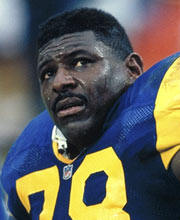
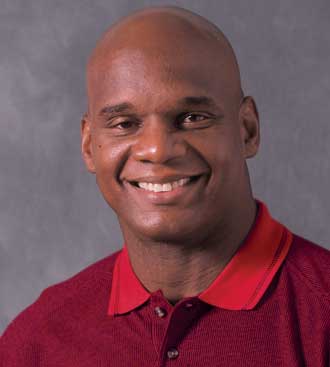
Earlier this year, the Raiders re-hired Art Shell to be their 15th head coach in the organization's storied history. Shell then went out and pulled in LA Rams Hall of Fame Offensive Tackle Jackie Slater (pictured in his Rams uniform) and Pro Bowl Tackle Irv Eatman (photo at left, from his days with the Chiefs) to coach the offensive line -- both are black. (While some reporters note that Slater has not coached for an NFL team, this does not mean he hasn't coached offensive linemen. He's ran his own clinic for several years.)

Noticing the New Orleans Saints gave up on a very good, capable, and mobile quarterback in Aaron Brooks, Shell and Oakland Raiders Senior Assistant Mike Lombardi went out and made a deal to dress him in the Silver and Black.

Now, the Raiders have African American representation at three of the organizational positions generally considered the most mentally demanding. It also bucks the current pattern of African Americans seemingly being "slotted" to defensive coach positions in college and the NFL. (And in baseball, where then-LA Dodgers General Manager Al Campanis made his now famous "blacks lack what it takes" comment on ABC's Nightline, no organization has had a black general manager, manager, and pitching coach at the same time, with the exception of the Negro Leagues).

In the NFL's past, the positions of quarterback, head coach, and offensive line coach were commonly held by European Americans, and while there have been and are black head coaches, offensive line coaches, and quarterbacks, never before has one organization had all three.

I personally think this is a major sign of tremendous social progress that should not go unnoticed.

Friday, March 24, 2006

Tampa Bay Bucs' To Meet With Charles Woodson' and Resign OT Kenyatta Walker

From the Tampa Tribune. The Bucs did resign the man known for three false start penalties in one drive last year. But that written, he's a solid blocker and leader. On the matter of leaders, former Raiders DB Charles Woodson is to meet with the organization. See below.

Bucs Say Walker Is Right On Line
By ROY CUMMINGS rcummings@tampatrib.com

TAMPA - After spending more than a week searching for upgrades, the Bucs have decided to stand pat at one of the most important positions on the field.

Less than 24 hours after they lost a bidding war for free-agent Tom Ashworth, the Bucs decided Friday to once again entrust right tackle Kenyatta Walker with protecting quarterback Chris Simms' blind side.

The signing of Walker comes just two days after the University of Florida product made what is believed to be his only free-agent visit. That was to Atlanta, where he met with Falcons general manager Rich McKay, the man who as Bucs GM traded up to get him 14th overall in the 2001 draft.

In the eyes of many, including several inside the Bucs camp, Walker never has justified the decision to draft him so high. He has, however, consistently outperformed all the players who have been brought in to challenge him, starting 77 of a possible 85 games since entering the NFL.

"Kenyatta started every game last year and helped us make the playoffs," Bucs coach Jon Gruden said in a statement released by the team. "We made great strides on offense last season and it was our goal to keep everyone on board so that we could continue that improvement."

AND....

Bucs Will Meet With Woodson
By ROY CUMMINGS rcummings@tampatrib.com

Published: Mar 24, 2006

TAMPA - The Bucs don't appear to be in need of a starting-caliber cornerback, but one of that ilk apparently is headed their way.

The agent for four-time Pro Bowl corner Charles Woodson confirmed that Woodson arrived in Tampa late Thursday for a meeting with the Bucs today.

Woodson, 29, had his best years while playing under Bucs coach Jon Gruden in Oakland, making the Pro Bowl in each of his first four seasons. Since 2002, however, Woodson has struggled to stay healthy and play up to the level of some enormous contracts.

Woodson made $10.5 million after being named the Raiders' franchise player for the second consecutive year last season, but for the fourth consecutive year he failed to turn in a complete season, missing the final 10 games because of a broken leg.

The Bucs appear set at corner, with starters Ronde Barber and Brian Kelly and backup Juran Bolden, who recently was re-signed to a multiyear contract. They are, however, in need of an experienced free safety, so the Bucs may plan to ask Woodson to consider a move there.

Rice Removes Name From NFL Commissioner Consideration

Well, at least we can put this matter to rest:

(AP) Secretary of State Condoleezza Rice, a huge football fan, ruled out applying for the newly opened post of NFL commissioner Wednesday.

"Unfortunately, it came open at the wrong time," said Rice, who was clearly amused when a reporter posed the question. "Obviously, I'm very busy as secretary of state, and I intend to continue to be secretary of state as long as the president of the United States will have me."

Bengals May Land Redskins LB Lavar Arrington


Personally, I think the Bengals need a wrecking ball of a defensive tackle and a new scheme, but if you can land a guy like Arrington, you do so.

The additiion of Arrington would give the Bengals one of the best linebacking corps in the NFL. But he's got to visit the team, first.

"Raider Nation" Upset and Confused By Team's Latest Moves


On message boards and email posts everywhere, Oakland Raiders fans are expressing an all too noticeable lack of joy and pleasure over the team's free agent signings.

While former Saints QB Aaron Brooks is actually considered by many to be a great addition (Dave Del Grande of the Oakland Tribune called him "Kerry Collins with legs.") the source of the displeasure is the signing of former New England Patriots defensive backs Duane Starks and Tyrone Poole.

One fan wrote this:

OK, lets review the acquisition of these 2 New England Chowder Pat Rats.

1) Starks: The words " lone season " scares me, not to mention a shoulder injury. On a positive note he is a 6yr veteran, a CB with decent stats, and has about 5 to 6 months to heal his shoulder and get his ASS in gear to developing a Raider mentality!

2) Ty kwan Poole: Big AL, I hope you were not on the SAUCE when you made this choice..!!! I'm believing in you!

He's a name I'm familiar with, but he has 11 yrs. of miles on that injured ankle, and has only played six games in the last two yrs. with just one game last year HMMMM!..

Granted he has 11yrs under his belt and I hope it's tight enough when he's on the field defending the top veterans, and the rookie youngsters with an attitude.Trust me they will only try to embarrass him!.. An injured Wing is different from a bad Wheel out of balance!! We'll see..

I'm hoping that Fabian Washington, is over the rookie jitters, and will show us the speed and talent he demonstrated in college.

Nnamdi Asomugha, has already proved himself, and the strength and contributions of his fellow CB's and Secondary Will only add fire power and prevent them from getting BURNED!!!!!

Your thoughts my Raider brothers and sista's who care! Raider Bob!

Thursday, March 23, 2006

Will Katie Holmes Play Wonder Woman?

You never know, but she'd be better than Lohan in my view. Still, Holmes is not the best choice in my view.

Wednesday, March 22, 2006

Lindsay Lohan Wants To Play Wonder Woman


Personally, I'm not hot about the idea. I think a really buffed actress should play her

From www.imdb.com:

Herbie: Fully Loaded star Lindsay Lohan is desperate to play Wonder Woman in the forthcoming movie version of the comic book superhero. The 19-year-old Freaky Friday actress admits she'd like to showcase her talents outside of kid and teen films, but feels the role would be too fun to turn down. She says, "Wonder Woman would be cool. I'm trying to find roles right now that are different to anything I've done to show my abilities, to show that I have some sort of stretch in me. Because most of the things that I've done so far are aimed at younger girls and are light-hearted."

Wonder Woman Script Should Be Finished By Now According to Sci-Fi Wire

Not too long ago, I got after Josh Whedon, the writer / director for the new "Wonder Woman" movie, for seemingly dragging his feet on the project. Now, he tells Sci-Fi Wire that it should be finshed by this week.

This is what he said:

"I'm probably going to turn it in in a few days," Whedon said of his Wonder Woman script. "It's coming along. ... There will be all of the expected stuff. Of course there will be the bracelets; there will be the invisible jet, the lasso, all of that."

Whedon likened the character to another one of his creations, Buffy the Vampire Slayer, adding: "It's about girls maturing, a rite of passage, that kind of thing."

Whedon said it's too early to speculate on casting for the project. He will be turning the script in to Warner Brothers and hopes to begin production later this year.

Adam Vinatieri's Clutch Kick Experience Comes to the Colts

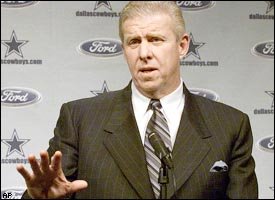
This is an awesome trade for the "We're not going to do much in free agency" Colts -- as GM Bill Polian said this year. If the Colts had Adam Vinatieri against the Pittsburgh Steelers, they may very well have been in the Super Bowl against the Seawhawks.

Wednesday, March 22
PRESSURE PLAYER

By John Oehser - Colts.com

Vinatieri’s Ability Under Pressure Key in Colts’ Decision
INDIANAPOLIS – At first, Bill Polian said, it didn’t seem likely.

Adam Vinatieri, after all, had been a member of the New England Patriots for 10 seasons. His clutch kicks made him a legend in the Boston area, inexorably linking him with that franchise’s success over the last half decade.

Then word came:

Vinatieri, one of the most reliable postseason kickers in NFL history, was almost certainly not going to re-sign with the Patriots. And Indianapolis was among the teams in which he was interested.

Vinatieri, 33, helped the Patriots win three of the last five Super Bowls, and his late-game heroics in the post-season have earned him a reputation as one of the NFL’s top big-game performers.

In the 2001 post-season, Vinatieri’s 45-yard field goal in a driving snowstorm helped the Patriots force overtime against the Oakland Raiders in an AFC Divisional Playoff. His 23-yard overtime field goal gave the Patriots the victory.

Vinatieri, the NFL’s leading scorer in 2004, is a career 81.9 percent field-goal kicker, having made 263 of 321 attempts. He also has handled kickoff duties throughout his career and has 61 career touchbacks.

“What you’re excited about is you have a guy who has been in those situations and you don’t have to guess how he’s going to respond,” Colts Head Coach Tony Dungy said. “That’s really the biggest thing from our standpoint. Whether he’s from New England or anyplace else, you’re getting a Pro Bowl caliber guy, a guy who’s done what he’s done.

“The exciting thing for us is when you lose a really good player at any position and replace him with another player of the same caliber, that’s always fantastic.”

Former Saint's QB Aaron Brooks Now An Oakland Raider

Personally, this is a very exciting and dramatic development. It means that the Raiders are going to install an offense that takes advantage of his special tatents of mobility and arm strength. The Raiders have never had a quaterback quite like Aaron Brooks. If they can correct his tendency to throw off his back foot -- get him to set his feet before he throws -- he will be something to watch.

Raiders sign QB Brooks to two-year contract
NFL.com wire reports

ALAMEDA, Calif. (March 22, 2006) -- The Oakland Raiders found their replacement for Kerry Collins, signing quarterback Aaron Brooks to a two-year contract to compete for the starting job.

The 29-year-old Brooks was cut last week by New Orleans when the Saints signed Drew Brees, one of the most coveted free agents available this year.


After a disappointing 2005 season, Aaron Brooks will look to revive his career with Oakland.
Brooks started 13 games for New Orleans last season, completing 240 of 431 passes for 2,882 yards and 13 touchdowns against 17 interceptions.

"Oh, sweet," receiver Alvis Whitted said in a phone interview. "I'm glad that we do have a new quarterback. I'm sure he'll fit right in with what we're trying to get done here. I'm sure the coaches are excited. From what I've seen of him play, he's done some great things. He's very athletic, a mobile quarterback and very intelligent, too. He's a great fit for us, and we're happy to have him."

Brooks, who had started 82 straight games before being benched for the final three games of 2005, spent the past six seasons with the Saints after playing for Green Bay in his first NFL campaign in 1999.

Brooks, a fourth-round draft pick by the Packers out of Virginia, was one of few capable quarterbacks left on the market this offseason.

"Aaron gives us great depth at the quarterback position and provides us with a veteran presence," new Raiders coach Art Shell said.

Oakland parted ways with Collins on March 10 in an expected salary-cap move.

Tuesday, March 21, 2006

Debra Lafave - Hot Blonde Gets Off - Charges Dropped In Sex Case


This is freaking unbelieveable. I mean, you gotta be kidding, man! She got off.

Remember Debra Lafave, the totally hot (ok, too skinny for me) blonde teacher accused of having sex with a 14-year-old boy?

Well, today, Florida state procecutors decided to drop charges against her. Dropped them like a hot potato.

The AP reports:

(AP) State prosecutors decided Tuesday to drop charges against a former Tampa teacher accused of having sex with a 14-year-old middle school student.

The decision, announced hours after a judge rejected a plea deal for Debra Lafave, means the victim won't have to testify.

Prosecutors and defense attorneys had urged the judge to accept the deal for the sake of the boy involved. A psychiatrist who examined the teenager told the judge at a previous hearing that the boy suffered extreme anxiety from the media coverage of the case and does not want to testify.

Marion County Circuit Judge Hale Stancil, however, said the lack of prison time for Lafave under the plea deal "shocks the conscience of this court," and he rejected it.

Assistant State Attorney Richard Ridgway, in explaining the decision to drop the charges, said: "The court may be willing to risk the well-being of the victims in this case in order to force it to trial. I am not."

Lafave, 25, already faces three years of house arrest and seven years probation in Hillsborough County, where she was charged with having sex with the same boy in a classroom and her home. She pleaded guilty Nov. 22 to two counts of lewd and lascivious battery under a plea deal there.

In Marion County, she was accused of having sex with the boy in a sport utility vehicle.

Lafave said at a news conference later Tuesday that she has bipolar disorder, and her attorney said she was getting treatment.

"I have a lot of things in my past that have unfortunately become public," Lafave said.


Man, does this ever happen to a black man? Ok...maybe. Yeah, it does. But from another perspective, she also must have been a nice person who did something weird. If she were a jerk, they'd have locked her up.

South Park's Trey Parker and Matt Stone Launch Jihad Against Scientology


According to this NPR story, Trey Parker and Matt Stone, the creators of "South Park", issued this statement upon learning that a re-run of their now infamous "Scientology" episode (which makes fun of Tom Cruise who's pcitured at left)-- the one that caused singer and pop icon Isaac Hayes to quit his role as "Chef" on the show -- was cancelled, issued this statement:

FOR IMMEDIATE RELEASE

Scientology, you may have won THIS battle, but the million-year war for Earth has just begun! Temporarily anozinizing our episode will NOT stop us from keeping Thetans forever trapped in your pitiful man-bodies. Curses and drat! You have obstructed us for now, but your feeble bid to save humanity will fail! Hail Xenu!!!

-- Trey Parker and Matt Stone, servants of the dark lord Xenu


My question is can Parker and Stone live for a million years to continue the battle?

Monday, March 20, 2006

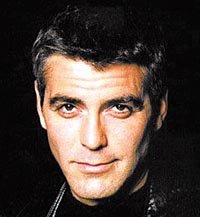
"ClooneyGate" - Arianna Huffington Puts Words Into George Clooney's Mouth


This following column has cause a lot of controversy as it was never written by Mr. Clooney, even though he agrees with the message. The New York Times picked up this story of miscommunication and intrigue in the blogsphere. After some thought, I am a bit confused that Clooney would approve this story, then back away from it. He knew it was being done and could have simply discouraged it without this silly drama.

George Clooney: I Am a Liberal. There, I Said It!

HUFFINGTONPOST.COM - March 12, 2006 -

I am a liberal. And I make no apologies for it. Hell, I'm proud of it.

Too many people run away from the label. They whisper it like you'd whisper "I'm a Nazi." Like it's dirty word. But turn away from saying "I'm a liberal" and it's like you're turning away from saying that blacks should be allowed to sit in the front of the bus, that women should be able to vote and get paid the same as a man, that McCarthy was wrong, that Vietnam was a mistake. And that Saddam Hussein had no ties to al-Qaeda and had nothing to do with 9/11.

This is an incredibly polarized time (wonder how that happened?). But I find that, more and more, people are trying to find things we can agree on. And, for me, one of the things we absolutely need to agree on is the idea that we're all allowed to question authority. We have to agree that it's not unpatriotic to hold our leaders accountable and to speak out.

That's one of the things that drew me to making a film about Murrow. When you hear Murrow say, "We mustn't confuse dissent with disloyalty" and "We can't defend freedom at home by deserting it at home," it's like he's commenting on today's headlines.

The fear of been criticized can be paralyzing. Just look at the way so many Democrats caved in the run up to the war. In 2003, a lot of us were saying, where is the link between Saddam and bin Laden? What does Iraq have to do with 9/11? We knew it was bullshit. Which is why it drives me crazy to hear all these Democrats saying, "We were misled." It makes me want to shout, "Fuck you, you weren't misled. You were afraid of being called unpatriotic."

Bottom line: it's not merely our right to question our government, it's our duty. Whatever the consequences. We can't demand freedom of speech then turn around and say, But please don't say bad things about us. You gotta be a grown up and take your hits.

I am a liberal. Fire away.

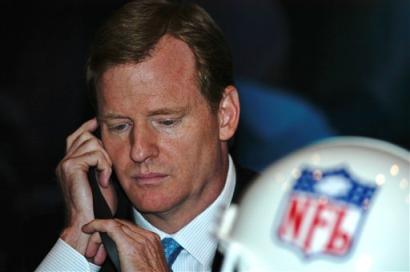
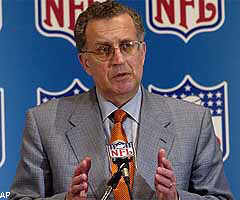
Commissioner Tagliabue Congradulates Raiders Owner Al Davis For Helping to Bring A Positive End to The CBA Talks


In an interview with NFL Network's Paul Burmiester, Retiring NFL Commissioner Paul Tagliabue credited Oakland Raiders Manager of The General Partner Al Davis with playing a key role in forging a concensus among the owners to support the proposed revisions to the NFL's CBA. "Al Davis has the respect of the owners, and over the years has given me a lot of good advice....During the meetings he came up and said 'We've got your votes, now they just don't know what they're voting on,'" which partly explains Buffalo Bill's Owner Ralph Wilson's "no" vote -- the only other one contrasting 30 "yes" votes -- because he explained he didn't undertand what they were proposing.

TRANSCRIPT: COMMISSIONER PAUL TAGLIABUE CONFERENCE CALL ON HIS RETIREMENT ANNOUNCEMENT

March 20, 2006 NATIONAL FOOTBALL LEAGUE - NFL.Media.com

COMMISSIONER PAUL TAGLIABUE CONFERENCE CALL ON HIS RETIREMENT ANNOUNCEMENT

THE MODERATOR: Thanks for joining us on relatively short notice. Commissioner Tagliabue will have some opening comments and then we'll go to your questions.

COMMISSIONER PAUL TAGLIABUE: Good afternoon, everybody. As you all know, we put out a statement this morning about my decision to step down and I just have a couple of comments and then I'll take your questions.

First of all, I really want to emphasize how much of a privilege it is to spend most of your adult life associated with the National Football League. And that's my way of saying that this is not an easy decision for me because 37 of my 65 years have been involved with the National Football League and it is a great institution with great people across the board and most of all, tremendous fans. So as difficult as the decision is, I also know that it's the right decision and I have no doubt about that. And when I say "right," I mean right for the league, which takes me to sort of the second point.

What I've been trying to do here in my own mind and with discussions over the past two years is to pick a time to make this transition when we would all be in a position to have all of the critical elements of the league in place, and be able to do two things. No. 1 would be to move forward and continue to serve the fans, continue to have the momentum we have on all fronts and do all the things we're trying to do both domestically and internationally; and at the same time, manage the search for my successor with the owners. And I came to the conclusion in the last tens day that this was the opportune time to undertake those twin responsibilities; No. 1, moving forward on everything we're doing; and No. 2, being involved with the search process.

I guess the final thing I would say is that in the last 10 days that I've been thinking about this, it became clearer and clearer to me that in this context, as in some other contexts, uncertainty is the enemy of growth and the enemy of successful operations. Put it the other way around: Uncertainty and speculation runs the risk of paralysis in a good organization and in an organization which is national and international such as our league. That became a real critical factor in my mind and the decision to make this announcement before the League Meeting in the midst of our off-season planning process was designed to eliminate uncertainty, to provide certainty and to enable a lot of things go forward very successfully in 2006 and beyond.

I'd be glad to take your questions.

Q. What do you think is your legacy to the league over your tenure?

COMMISSIONER PAUL TAGLIABUE: I don't know about legacy, but I think over the years we've accomplished a lot of things. Certainly the expansion of the league to 32 teams; the growth and the popularity of the sport and as part of that the equality of the game growing out of collective bargaining and other things; the fact that we didn't have any season interrupted by strikes or lockouts, all of those things I think are very, very important.

Q. Could you shed some light on how that might unfold in the next couple of weeks?

COMMISSIONER PAUL TAGLIABUE: How what might unfold?
Q. The search for your eventual replacement.

COMMISSIONER PAUL TAGLIABUE: Well, it's a little too early to be very specific about that. But we're going to start on Monday next week at the annual meeting in a conversation with each of the owners of the 32 teams to make sure that that they all participate fully in structuring the process that will lead to the search for my successor.
We'll have more that we can talk to you about next week at the League Meeting after we have that session next Monday with all of the owners.

Q. Were there any surprises or disappointments along the way with the television deals that you struck?

COMMISSIONER PAUL TAGLIABUE: Any surprises or disappointments on the television deals, I don't think so. I think that the biggest objective we had was to keep the product massed on broadcast television, and certainly there were no surprises in terms of the renewal of CBS and FOX. I guess if there was any surprise as all, it …when all is said, we’re done might be that we ended up with the primetime broadcast package moving from ABC to NBC.
But beyond that, I don't think there were any -- if anything qualifies as a semi-surprise, I guess that would be it.

Q. And going back further, was the proposed rollback in '93 or '94, was that something that you look back at with any regret? I believe you were in favor of a rollback.

COMMISSIONER PAUL TAGLIABUE: I still think it would have been the right thing to do, but we could talk about that for another day. I think that it really would have been the right thing to do, and it would not have had -- if anything, it would have had a positive long-term effect, and like I say, that's for another day.

Q. You talked about some things that you had done, but what is the one thing that you're kind of most proud of in your tenure, and did you think it would go like it did back when you got the job 16-plus years ago?

COMMISSIONER PAUL TAGLIABUE: I guess I'd have to say that turning around the relationship and building a strong relationship with the NFL Players Association would be the thing that I'm most proud of. I think everyone involved in the NFL saw that as a growing negative, and to be able to come in '89 and make that a priority; and then to turn that relationship around and make the players into partners through the Collective Bargaining Agreement and to have the kinds of agreements, CBAs, in place that we have had, now we will be approaching two decades, and I think that's a very positive thing.

Q. I'm specifically interested in how active you will continue to be in New Orleans and the efforts that you've started down here, but I guess for everyone's benefit, can you talk about what your role will continue to be as you move on in the next year or two?

COMMISSIONER PAUL TAGLIABUE: I don't know about the next year or two. Certainly I intend to continue to be very involved with the Saints and with the Saints' role in the rebuilding and recovery of the Gulf Coast region and the business council in New Orleans. I'm going to be down on April 6 speaking to a number of different groups in New Orleans and perhaps elsewhere in the region.

I spoke to Mr. Benson this morning and assured him that of all the priorities I had both personally and professionally, that the success of the Saints in that context was at the top of the list and I would continue to work very closely with him and the people down there.

Q. With all the new stadiums in place in your tenure, how does that rank in your portfolio, and are there any disappointments with the struggle to get new stadiums in California, with the 49ers, Raiders, Chargers and the L.A. market?

COMMISSIONER PAUL TAGLIABUE: I think the new stadium theme is very important. It's been a big part of the continued popularity and the growth and popularity of our game and our league.

I remember speaking to the search committee back in the fall of 1989 and saying that the league has to have a much more robust and proactive role in helping teams build stadiums. And then as soon as I became commissioner, I went to Boston and went to Chicago and had public meetings with business and civic leaders, emphasizing that the league would have a role in helping communities partner with NFL teams building stadiums. So that's a very important piece of what we've done, and in the late 90s, we put in our stadium subsidy program to help to participate in the financing of new stadiums.

I guess I would say that any city where we're still struggling with the issue, that's an ongoing priority. It's pleasing to get new stadiums built. It's disappointing when your efforts are not successful. But it's just a measure of an important continuing priority, not just in California, but here in New York with a stadium for the Jets and Giants over in New Jersey and over in the midwest in Minnesota and other places where we're still working on it. Those are important priorities.

Q. Now that you've cleared the CBA and revenue sharing hurdle, does the Los Angeles initiative move up on the list of priorities? And I'm also interested in if you feel that this change might affect the process, whether it will accelerate it or slow the process of getting a team back in Los Angeles.

COMMISSIONER PAUL TAGLIABUE: I don't think that my personal situation will have any impact one way or the other. I know from an owners' standpoint that we have had discussions within the past week that moving forward on Los Angeles is a key priority. We are going to be addressing it at the meeting next week. I'm going to be spending time in California in April and probably again in May. We're also expecting to make some decisions in the meetings. I think the main point you made was embedded in your question. With television behind us and the CBA behind us, getting a team or teams back into the Los Angeles area rises right to the top of the list, not only because we have the time to commit to it, but because the foundation, the economic foundations that enable us to look at that type of a challenge and to address it are in place with TV in place and labor in place.

Q. I was wondering for your successor, if you could give us a rough draft on what the challenges might be ahead for him, both, say, in the next couple of years, and as you look at the NFL, ten years down the road.

COMMISSIONER PAUL TAGLIABUE: I just spoke to my senior staff about an hour ago and I think that I see it as one of opportunity. I told the staff that we have a lot of things in place, a lot of initiatives underway. We are looking hard at all of the digital media service opportunities. We're looking at the Internet. We're looking at international regular season games. Still more stadium construction; that will be an ongoing priority. Making certain that the new collective bargaining agreement works as it should; there's some new elements in there in terms of how the cap is structured. So I think there are tremendous opportunities.

I've been saying for some years that the face of professional sports will probably change as much in the next ten or 15 years as it's changed in the last 30 to 50 years, and I think a lot of that change is going to be driven by the digital media, the globalization of media, the internationalization of sports and the demographic changes in the United States. I think it's a very exciting time. I wish I was 40 instead of 65.

Q. And also, do you have a successor in mind that you're going to recommend? Your right-hand man has been mentioned as a top candidate.

COMMISSIONER PAUL TAGLIABUE: The way we'll approach it is to have a very comprehensive search that will identify both internal candidates, candidates internal to the league, whether it's our own offices or a team, as well as outside candidates in other businesses or other organizations, and to work with the owners to bring the list of multiple, strong candidates to them to evaluate and then start the winnowing out process.

One of my goals as commissioner going back to the early 90s was to expand and build our organization to bring really talented executives in. Two of the first decisions I made were to create the position of NFL president, bringing Neil Austrian in from another business area into that division. I created the division of an executive chairman of the NFL Management Council, brought Harold Henderson in from Amtrak for that position; that was in the early 90s.

And then over the years, we've made it a priority; "we" being me and the owners to have really top executive talent in our organization. And certainly a number of those people get strong consideration as my successor; I'm sure, as well as outsiders.

Q. I'm curious, on your watch there has been great emphasis on making sure that minority candidates get a good look for coaching positions and front office positions with the clubs. Will you see to it in some way that this also happens in the search for your successor?

COMMISSIONER PAUL TAGLIABUE: Yes, Dan Rooney and I have already talked about that, and that will be one of the key things as we go forward with this search.

Q. Can you say in what kind of way that would take place?

COMMISSIONER PAUL TAGLIABUE: As I say, Dan and I have already started talking about it. I have had, going back for some months, I've spoken to Jeff Pash, our general counsel, about that. As you know Jeff has been managing the Diversity Committee with Dan, and it's certainly uppermost in our minds what we need to do with this search, what the Diversity Committee has been urging the clubs to do with coaches and front office executives. The specifics are yet to be determined as to how we'll make sure that goal is accomplished.

Q. I wanted to ask you about the timing of this, if the CBA deal had not gone through and you were still in a labor situation, would you have postponed this decision? And No. 2, you remember obviously how your search dragged on longer than what people have expected, and while you've said July, if there was no successor in place by July, would you stay on longer?
COMMISSIONER PAUL TAGLIABUE: On the second question, the answer is yes. July is sort of a target that we set for ourselves when we created this package in my employment contract. But the understanding has always been that if -- that I would stay on until a successor was ready to be in place.

On the first question it's a little bit speculative obviously because we got the CBA extension done, but my guess would be that my decision would have been the same after having created these two paths in my contract. One is a path that would carry me through to 2008 as the commissioner, and the second was this path that gives me the alternative to step down here in the spring of '06 and continue in some other role until 2008 my guess is then I would have chosen that latter path either way in terms of the CBA.

Q. So do you think the owners kind of understood that, and maybe there was more pressure on them to get it done while you were still in command, as opposed to a new person in charge?

COMMISSIONER PAUL TAGLIABUE: No, I don't think it was a factor at all. It was never discussed and it was never brought up. The owners on my contract committee and I kind of had a task of understanding that whatever I was going to do on my contract, whatever they were going to do on my contract as we move forward this spring, that would be deferred until after the CBA negotiations were done. Either way it would not become a factor in the negotiations.

Q. There were a lot of successes you have had over the years, but if you had to have one do-over, what would that be?

COMMISSIONER PAUL TAGLIABUE: I would have been able to dribble with my left better than I could.
I don't know, I think I've said before that if we had the benefit of hindsight, we would have made certain that either the Rams or the Raiders stayed in L.A. in the mid-90s. I thought that we were taking all of the steps that we needed to take when we passed that resolution in providing for the stadium in Hollywood Park, and it turned out not to be operative. I guess if you could go back and relive a month, that might be the month where you might do something differently.

Q. There's a rumor that Condoleezza Rice is interested in being Commissioner for the NFL. Can you dispel or confirm that rumor?

COMMISSIONER PAUL TAGLIABUE: Well, I think she's the one who said publicly she would be interested in the job. I don't know whether that's facetious on her part or not. She was at the Super Bowl this year with us, and she made it very clear she wants the job she has. I think if you really want to have a definitive answer to the question, go to her next press conference.
Q. Is there any sense of urgency with you leaving in July or perhaps a little bit later for your successor to try to get things in L.A. wrapped up before then and before there's change where your successor might do something differently? And also, in all of the years that Los Angeles has been without a team, I was wondering how much credit or blame you might feel for that?

COMMISSIONER PAUL TAGLIABUE: I think it's the same answer I gave a few minutes ago. Those issues are not personal to me. I think they are institutional and I don't think the urgency on the part of the league to get back there with a successful team or teams is going to be changed by my own personal situation. I think that whatever was the prevailing point of view on L.A. last Friday, it's going to be the same point of view next Friday and the Friday after, but it is a major priority and we'll continue to act on that basis.

Q. You touched on this a little while ago with the regret you had about allowing the Rams or the Raiders to leave, but did you anticipate -- when you look back did you think it would be possible a team would be out of market the size of L.A. for this long?

COMMISSIONER PAUL TAGLIABUE: As I said, when we adopted that resolution in Hollywood Park we thought that would be adequate to secure that a team would be remaining, but that turned out not to be the case and we've got to figure out how to get it done now.
Q. How great an effort was there made by people in the league to talk you out of this in the last day or days, and if there was a great effort, did you give any serious consideration to reconsider?

COMMISSIONER PAUL TAGLIABUE: There was no effort made because nobody, other than Dan Rooney, knew what my thinking was likely to be. We had extensive discussions about two years ago when I extended my contract, and at that time, I started those discussions with the idea that I would wrap things up a year ago in May of 2005. And at that time, a number of owners spoke to me and urged me to extend at least through the spring of '06. And those owners who spoke to me rather emphatically included Dan Rooney, Jerry Richardson, Pat Bowlen, Bob Kraft, probably some others.

But once we restructured my contract, they and others I think understood that we had two different paths, as I mentioned earlier, one through the spring of '06, and another through the spring of '08; and that if I decided to step down as commissioner now, I'd make myself available for another two years in other roles as the owners might see fit.

We didn't have any discussions in the last ten days with owners. I did call Dan Rooney in the middle of last week and say that the question I was considering was whether I should announce this decision now, or wait until some time between the end of our March meeting and the beginning of our May league meeting; in other words, put this decision off until sometime in late April or early May.

It seemed to me that eliminating the uncertainty now, letting all of the owners know at the same time what my decision was, and going forward on that basis was the right course of action, and Dan Rooney said that basically it was my call and he would accept whatever judgment I made.

Then I spoke to him this morning and said that it seemed to me, like I said earlier, the biggest enemy here is uncertainty and speculation. The biggest positive is candor, certainty and continuity and the best way we could achieve the latter was to make this announcement now as we go into our league meeting rather than after the league meeting.

Q. As you envision the evolving league economics, what do you think the most tangible aspect of the new revenue sharing model will be in terms of how fans might see an impact on the game and the product?

COMMISSIONER PAUL TAGLIABUE: I think the revenue sharing model is much more specific than we had in the past in terms of the level of spending that clubs need to plan for as a percentage of their own revenue. I think that's a real positive. I think it gives teams predictability as to their competitiveness in signing players. I think the salary structure will create predictability in the outer limit of player costs. I think that's one important aspect of the new structure.

The second important aspect is the funding of revenue sharing through digital media and the Internet, which provides, pretty well assured, that the funding of revenue sharing will be there and it also avoids or minimizes the potential that those revenue streams would become an additional source of any revenue disparity that could be unsettling.

Q. When you talk about where digital media is going, do you envision a situation where fans could get every NFL game on the Internet? Is that where this is headed, and how does that conflict with what you are doing with your television contract?

COMMISSIONER PAUL TAGLIABUE: I don't have the answer to that. No one has the answer to that. I don't think it has as much to do with live games as it has to do with other services. I think that certainly through 2011, the live games are going to be focused where they are, on live television, cable and satellite.

I think the digital media in the short term has to do with highlights, has to do with mobile services, has to do with wireless services, has to do with video on demand. But beyond 2011, I think it's pretty speculative as to what happens to live games. But I don't see that the Internet is going to become the all-purpose source for all sports television.

Q. What are you going to miss most about the job?

COMMISSIONER PAUL TAGLIABUE: Just the excitement of being involved in something that is as much of a major piece of millions of people's lives as the NFL. It's a little bit like the agony of defeat and the triumph of winning. When you do things well, you enjoy the upside. When you stumble, you agonize over the stumbles, but you're an active part and you're involved in shaping what's very exciting for millions and millions of people, which is following NFL football, following the championship race right up to and including the Super Bowl. And also the impact that has on bringing communities together, setting examples for kids and just everything the NFL stands for. It's fun.

Q. A reference was made earlier about staying on past July if need be, do you anticipate as tough a time finding your successor as the owners had finding -- eventually picking you? And was there one moment that you knew this was the right decision; that you made up your mind what you were doing?

COMMISSIONER PAUL TAGLIABUE: I didn't know what to anticipate because we don't have a discussion with the owners until next Monday, so it's really hard to say. But kind of the assumption is that we can work through this in the next four months, and I'll be ready to move on by the end of July. If that turns out not to be the case, that will take us beyond that into the beginning of the regular season.

On the second question, there was no moment. But like I said before, going back to the winter and spring of 2004, I was of the view that as I approached age 65 and 15 or more years of service, that that would be a good run and I would be healthy enough to do some other things in my life. And so I think that this path was kind of charted in the winter and spring of; 04, and then with the success we've had since then, it just seemed like that was it; that it was clearer and clearer that this was a good, opportune time from a league standpoint, as well as my own personal standpoint, to make this transition.
If there was ever a moment in time, I think you'd have to put it back to the winter and spring of '04 when we structured this two-phase contract.

THE MODERATOR: Thank you very much.

Commissioner Tagliabue Will Retire But Stil Be Involved In Several NFL Business Matters


At 1:30 PM PST today, the National Football League held a press conference call to officially announce the retirement of NFL Commissioner Paul Tagliabue. With NFL VP of Public Relations Greg Aiello at his side, Commissioner Tagliabue adroitly fielded questions from the phone-based press corp, including this author.

The vast majority of the queries were on the matter of current NFL business matters regarding the location of a team in Los Angeles "We're prepared to move forward," he said. Tagliabue will also stick around to push that initiative and to stewart the revival of the NFL's Saints' presence in New Orleans. The Commissioner explained that he would be flying to New Orleans in a few weeks on that matter.

Raiders or Rams Leaving LA Only Regret

Commissioner Tagliabue claims his greatest successes as the construction of new stadiums, the expansion of the league, and of course, the recent completion of the NFL Collective Bargaining Agreement (CBA). When I asked him what he would like a "do over" on, he said his greatest "do over" opportunity would certainly be the LA matter. "I don't know, I think I've said before that if we had the benefit of hindsight, we would have made certain that either the Rams or the Raiders stayed in L.A. in the mid-90s. I thought that we were taking all of the steps that we needed to take when we passed that resolution in providing for the stadium in Hollywood Park, and it turned out not to be operative. I guess if you could go back and relive a month, that might be the month where you might do something differently."

I asked if the rumors regarding Secretary of State Condoleezza Rice's interests in the Commissioner's position were true. "Well," he said, "I think she's the one who said publicly she would be interested in the job. I don't know whether that's facetious on her part or not. She was at the Super Bowl this year with us, and she made it very clear she wants the job she has. I think if you really want to have a definitive answer to the question, go to her next press conference.

A Steady Hand

On a personal level, when I think of Paul Tagliabue, the words "stability," "focus," and "friendliness" come up. They stem from my first NFL Owners Meeting held in Chicago at the Hyatt Regency O'Hare on November 1-3 of 1999. They call it the "Fall Owners Meeting." At any rate, as the head of the effort to bring the Super Bowl to Oakland, I was invited to The Wilson Cocktail Party held that Monday evening and presented by the maker of the footballs used by the league.

I was completely and totally nervous, but decided that I was going to be with other human beings and didn't have to worry about being eaten. I was one of the first to arrive; the other being Dennis Lewin, who was then head of television affairs for the league, and Houston Texans Owner Bob McNair. As we carried on a lively and friendly conversation, the owners trickled in, and finally Commissioner Tagliabue.

The Commissioner has a presense. A fact built in part by his height at 6'7, his celebrity, and mostly his posture. He carries an upright walk, but with a personality devoid of a patrician affect that makes some unapproachable. At the time he walked in, I'd migrated over to a group of owners including Jack Faukner of the LA Rams and Pat Bowlen of the Denver Broncos. Commissioner Tagliabue came over and the first subject on his mind was to give a kind of impromptu attendance report to the group. What struck me was his constant attention to league matters, but in a relaxed way.

When I finally got the chance to meet him, his greeting was warm and sincere. But I most remembered that he looked me in the eye, so I didn't have the impression that he was going through the motions of a party. He was paying attention to every NFL detail, including this new guy who was trying to bring the NFL's marque even to a city containing the league's least popular owner.

My last lengthy meeting with him was on May 10th of 2005 and in a two hour meeting between Super Bowl: Oakland officials, and the Commissioners' senior staff. Again, Paul had the same commanding yet comfortable persona, but let his staff members -- in this case then-NFL Senior Vice President for Special Events Jim Steeg -- do most of the talking. Paul didn't say anything until about 37 minutes into the meeting, the start of which was delayed because Oakland Mayor Jerry Brown came in 10 minutes late. He asked me if I had a financing plan for the new, temporary stadium seats, and I did explain a naming rights concept I developed. He nodded in approval.

After the meeting, he came over, shook my hand,...and looked me right in the eye.

NFL COO - And Friend - Roger Goodell Rumored To Take Over For Tagliabue


NFL Commissioner Search | Roger Goodell Oddsmakers Favorite To Win Job | Roger Goodell Press Conference Transcript

I first met Roger Goodell on the phone. I was instructed to call him by Oakland Raiders Executive Assistant Al LoCasale. At the time, I was Economic Advisor to Oakland Mayor Elihu Harris and was working behind the scenes to reestablish the preseason game between the San Francisco 49ers and The Oakland Raiders. Roger and I spent the first 40 minutes talking about politics before we discussed the matter of the game.

The second time we talked -- and that was on several occasions -- was when I worked to bring the Super Bowl to Oakland. I called Roger to ask what his idea of the best Super Bowl was and why. He told me "It was the 1991 Super Bowl. The Giants v. The Bills. It was right after the Gulf War and their was a great feeling of pride in our country and that was reflected in the way the game was presented, with the airplanes overhead, and the fireworks." What that told me was that the NFL understood it's place in America's culture and how what it does is tied to the mood of America. But what it also told me was that Roger knew this, and perhaps better than most.

I remember seeing Roger as I was setting up the video for our Super Bowl: Oakland presentation to Commissioner Tagliabue in a special meeting we had set on May 10th, 2000 at NFL Headquarters in NYC. Roger came over, and showed me how to work the video machine and we talked early on. Later, he joined Commissioner Tagliabue in our presentation meeting. I remember thinking that Roger never seemed to get caught up in the importance of what he was doing. Indeed, he seemed quite comfortable and always personable.

When I returned home, I got the latest issue of The Sports Business Journal, and learned that Roger had just been promoted to Chief Operating Officer of the NFL.

Roger's sometimes the receipient of the blunt words of a deal maker trying to force an outcome with the always careful NFL. In this case, that person was Hollywood's legendary super agent, Mike Ovitz, whom I met after cold calling him in 1997 with an opportunity to own the Oakland Athletics. I ran into Ovitz, who was trying to land an NFL team in Los Angeles, at Super Bowl XXXV between the Oakland Raiders and the Tampa Bay Bucaneers. I asked Mike how the NFL was treating him. "Terrible. Roger Goodell doesn't want an NFL team in LA." I asked if I could tell Roger that he said that, and he said "Yeah. Tell him I said that."

So, I ran into Milt Aldrich, head of NFL Security, and whom I'd not talked to in a couple of years, and asked "Say, are going to see Roger?" Milt said "As a matter of fact, yes." Well, relay this message to him....

The last tiime I saw Roger was at last year's NFL Draft and at this year's great Super Bowl in Detroit. He always asked how I was doing and never seemed to miss a beat of time at his work.

I can't think of a better person to lead the NFL. I hope he gets the job.

PAUL TAGLIABUE ANNOUNCES HIS RETIREMENT AS NFL COMMISSIONER


NATIONAL FOOTBALL LEAGUE
280 Park Avenue, New York, NY 10017
(212) 450-2000 * FAX (212) 681-7573
WWW.NFLMedia.com


Joe Browne, Executive Vice President-Communications
Greg Aiello, Vice President-Public Relations

FOR USE AS DESIRED
NFL-10 3/20/06

PAUL TAGLIABUE ANNOUNCES HIS RETIREMENT AS NFL COMMISSIONER

Commissioner PAUL TAGLIABUE is retiring at the end of July from the position that he has held since late 1989, the NFL announced today.

Tagliabue, 65, called Pittsburgh Steelers owner DAN ROONEY early this morning and told him of his decision. Rooney, the chairman of the ownership committee that negotiated Tagliabue’s last contract extension in 2004, notified all clubs by email at noon (ET).

“I believe that now is a positive time to make the transition to a new commissioner,” Tagliabue said. “We have a collective bargaining extension in place, long-term television contracts, and have undertaken many other strong elements in league and club operations. I am honored to have been commissioner since late 1989 and to have been heavily involved with the league, its owners, clubs, coaches, players, fans and media since 1969.”

NFL owners will begin formal discussions of transition planning and the search for a new commissioner at the NFL Annual Meeting, which begins March 26 in Orlando, Florida.

As part of his contract with the league, Tagliabue will be available to serve in a senior executive/advisory role through May 31, 2008 once a new commissioner is selected.

Under Tagliabue’s leadership, the NFL has grown from 28 to 32 teams, revised its divisional alignment and scheduling formula, operated under successive long-term labor agreements with the NFL Players Association, and maintained its preeminent position in sports television.

During this time, the NFL also has expanded league and team commitments to community service, refocused the NFL’s efforts in developing public-private partnerships for new stadiums, and expanded its international appeal and presence.
In addition, the NFL under Tagliabue has been the new media leader in sports, creating the first leaguewide Internet network for fans and first satellite television subscription service, and launching the NFL Network on cable and satellite television.
Before succeeding the late PETE ROZELLE as the league’s CEO on October 26, 1989, Tagliabue represented the NFL as an attorney in many important areas as a partner at Covington & Burling, a Washington, D.C., law firm, the NFL’s principal outside counsel.
# # #

New Women's Fitness Blog By Debbie Kaplan

My friend Debbie Kaplan's joining SBS with her new blog. Check it out with a click on the title of this post.

Sunday, March 19, 2006

The Terrell Owens - Dallas Cowboys Deal; Where's Bill Parcells


There are some sources -- check Pro Football Talk at www.profootballtalk.com -- who believe that the deal to bring Terrell Owens to the Dallas Cowboys was not approved of by Head Coach Bill Parcells.

But of all of these comments I found at the Dallas Cowboys website, the one by Quarterback Drew Bledsoe seems to indicate that Parcells did back the deal. Read on:


IRVING, Texas - The Cowboys' signing of Terrell Owens is undoubtedly one of the biggest NFL stories in recent history.

So here is what they're saying about Owens suddenly becoming a Dallas Cowboy:

Former San Francisco quarterback Jeff Garcia, who once played with Owens, took the high road this week after signing with Philadelphia when asked about the outspoken wide receiver who trashed him before getting traded: "I don't have a problem with the guy. The guy is a tremendous player on the field."

Former Cowboys tight end James Whalen, who spent training camp with the Eagles in 2005: "In my opinion, he's the best player in the NFL. To me, his biggest problem in Philadelphia was that he felt he was owed more money. And Philly wasn't willing to compromise. But I think it can work (in Dallas). If he's happy with his contract, I don't think he's going to be a problem."

Former Cowboys safety George Teague, who decked the celebrating Owens at the 50-yard line during a 2000 regular-season game: "I'm still in a little disbelief. But I know Jerry Jones and I know we want to win football. But for me personally, it's a little disappointing after how his actions a couple of years ago . . . I don't see how anyone can forget."

Cowboys owner and general manager Jerry Jones on the contract given to Owens: "We can both disappoint each other in this agreement. But this is no free lunch to the Dallas Cowboys. We made a commitment to him. That means something."

Terrell Owens when asked about the 2000 incident when he twice celebrated on the 50-yard line star at Texas Stadium: "No disrespect. I am a competitor. I wanted to win. Just as Emmitt [Smith] did when he stood in the star, I am going to embrace it from here on out."

Cowboys quarterback Drew Bledsoe when asked if he was surprised that Bill Parcells would want to sign Owens: "It doesn't surprise me at all. Bill wants to win, just like I do, just like Jerry does, just like all of us. And if there's a chance to make us better, then it doesn't surprise me one bit that he would sign off on this."

Former Cowboys wide receiver Michael Irvin, a good friend of Owens: "In order for the Cowboys to get where they need to get, they need a pure No. 1 receiver, and that's what this guy is. When Drew drops back three, five and seven (yards), he will get open. And the times he's not open, throw it anyway because he can still get it."